

Ask UK Holiday Breaks
Tell us where you're going, who you're travelling with, or what you'd like to do.
Severn Bore
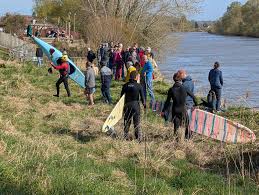
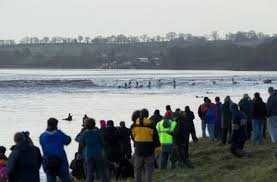
The Severn Bore
What it is
The Severn Bore is a powerful natural phenomenon where the rising tide of the Atlantic Ocean is funneled into the Bristol Channel and up the River Severn. This creates a literal wall of water—a tidal wave—that travels upstream against the river’s current. It is one of only a few dozen such phenomena in the world and is among the most spectacular due to the Severn’s massive tidal range.
Where it is
It occurs on the lower reaches of the River Severn in Gloucestershire, England. The most popular viewing spots are usually between Aure, Framilode, Epney, Minsterworth, and Maisemore.
What you can do, see, and experience
The primary experience is the sight and sound of the wave itself. Depending on the size of the bore, you can hear it roaring from a distance before it sweeps past. You will see a wall of water ranging from a few inches to several feet high.
- Spectating: Most visitors line the riverbanks or stand on bridges to watch the wave pass.
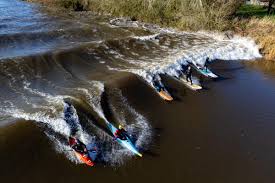
- Surfing and Kayaking: On larger “four-star” or “five-star” bores, you will see dozens of surfers, paddleboarders, and kayakers attempting to ride the wave for miles—a unique feat of endurance and skill.
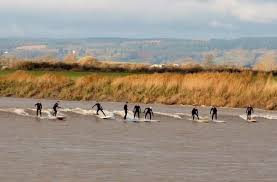
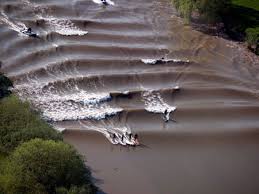
Average duration of a visit
Most people spend about 30 to 60 minutes at a specific location. Because the wave moves at roughly 10–13 miles per hour, it passes any single point quite quickly. Some enthusiasts “chase” the bore by driving to multiple viewing points further upstream, which can extend the visit to 2 or 3 hours.
Who will enjoy it most
- Nature Lovers and Photographers: Those who appreciate rare geographical events and dramatic landscapes.
- Adrenaline Seekers: Surfers and kayakers who want the bucket-list experience of riding a continuous river wave.
- Families: Children often find the “wave coming out of nowhere” exciting and magical.
Suitability and limitations
The Severn Bore is a “perfect fit” for able-bodied outdoorsy types. However, others may have a limited experience because:
- Mobility: Many riverbanks are muddy, slippery, or steep, making access difficult for those with limited mobility or pushchairs.
- Weather: There is no shelter; if it’s raining, you will get wet.
- Timing: If you arrive five minutes late, you have missed the entire event.
The best time to visit
- For Magnitude: The biggest waves occur during Spring Tides (around the New Moon and Full Moon).
- For Comfort: Dry, daylight bores in the late spring or early autumn are most pleasant.
- For Peace: Mid-week morning bores are much quieter than weekend afternoon events, which can draw large crowds.
What makes it unique
While there are other tidal bores (like the Trent Aegir), the Severn Bore is unique because of its height and the distance it travels. It is world-renowned in the surfing community as one of the longest rides possible on a single wave.
Budget, costs, and memberships
The Severn Bore is entirely free to watch. There are no entrance fees because it is a natural event occurring on a public river.
- Annual Memberships: There is no “official” membership or annual pass for the bore itself.
- Cost-Effective Tips: To save money, avoid the “official” pub car parks that may charge a premium during five-star bores. Look for safe, legal laybys further from the main hubs.
- Group Benefits: Joining local surfing or rowing clubs can provide better access to launch points, but for a casual visitor, there are no specific “offers” needed as the event costs nothing.
Essential visitor advice
- Clothing: Wear sturdy boots or wellies, as riverbanks are almost always muddy. Bring waterproofs regardless of the forecast.
- Food: There are no vendors on the riverbanks. Bring a thermos of hot drink and snacks, especially if you are waiting in the cold.
- Parking: Arrive at least 45 to 60 minutes early. Roads near popular spots like Minsterworth get extremely congested, and parking can be difficult to find.
- Safety: The tide rises very quickly behind the wave. Never stand on the “wet side” of the flood defenses and stay off the mud flats.