

Ask UK Holiday Breaks
Tell us where you're going, who you're travelling with, or what you'd like to do.
Cirencester Roman Amphitheatre
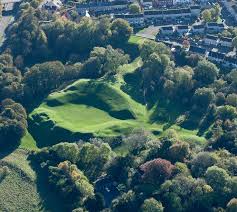
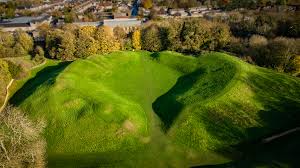
Cirencester Roman Amphitheatre remains open to the public and is managed by Cirencester Town Council on behalf of English Heritage.
What is Cirencester Roman Amphitheatre?
The site contains the massive earthwork remains of one of the largest Roman amphitheatres in Britain. Built in the early 2nd century, it served the Roman city of Corinium (modern-day Cirencester), which was the second largest town in Roman Britain after London. At its peak, the oval-shaped arena could hold approximately 8,000 spectators on tiered wooden seats supported by stone-faced banks. After the Romans left, the site was used as a fortress, a medieval rabbit warren, and potentially a bull-baiting ring, which earned it the local nickname “The Bull Ring.”
Location
The amphitheatre is located on the western outskirts of Cirencester, just off Cotswold Avenue (Postcode: GL7 1XW). It is a short, 10-minute walk from the town centre and sits adjacent to the bypass.
What to See and Experience
- The Arena and Banks: You can walk into the central arena and climb the steep earth banks, which still reach up to 25 feet (around 7.5 metres) high, offering a clear sense of the structure’s original scale.
- The Obelisk: Located nearby, this 18th-century landmark marks the historic boundary of the Bathurst Estate and offers a great vantage point.
- Information Panels: English Heritage provides interpretation boards at the entrances that illustrate how the site would have looked during the 2nd century and detail its archaeological history.
- Tranquility and Nature: Today, the site is a peaceful green space, often filled with wildflowers in spring or a “shimmering wonderland” in winter.
Duration and Best Time to Visit
- Average Stay: Most visitors typically spend between 30 to 45 minutes exploring the site.
- Best Time to Visit:
- For Quiet: Weekday mornings are generally the quietest.
- For Photography: A “fiery sunset” viewed from the top of the mounds is highly recommended for stunning views over Cirencester’s rooftops.
- Weather: As an entirely outdoor, exposed site with grass and earth surfaces, it is best enjoyed on sunny and dry days.
Who Will Enjoy It Most?
- History Enthusiasts and Archaeologists: Those with a passion for Roman Britain will appreciate the site’s significance and its link to the nearby Corinium Museum.
- Walkers and Dog Owners: The site is very dog-friendly (dogs on leads welcome) and is a popular stop on local walking trails.
- Families with Children: Kids often enjoy the freedom to run in the arena and climb the mounds, making it a great spot for “imaginative play.”
- Budget Travellers: As the site is free to enter, it is perfect for those on a tight budget.
Accessibility and Limitations
The site may provide a limited experience for some:
- Mobility Issues: The entrance has a small flight of steps, and the terrain is steep and uneven. It is not suitable for wheelchairs or those with significant mobility difficulties.
- Expectation Management: Visitors expecting standing stone ruins (like the Colosseum) may be disappointed, as it consists entirely of earthworks.
Uniqueness Compared to Nearby Sites
While other Roman sites like Chedworth Roman Villa offer preserved mosaics and walls, Cirencester’s amphitheatre is unique for its sheer scale—it is one of the largest in the country. Unlike the circular amphitheatres at Silchester or Dorchester, Cirencester’s is notably oval.
Cost and Membership
- Admission: Entry is free for everyone at all times.
- Memberships: Because entry is free, there is no direct financial saving from an English Heritage or annual membership for this specific site. However, members may feel a sense of contribution toward the conservation of such “scheduled ancient monuments.”
- Budget Tip: Since there is no entry fee, the most cost-effective way to visit is to pair it with a picnic, as there are no on-site food costs.
Visitor Advice
- Clothing: Wear stout footwear (hiking boots or strong trainers) as the grass can be slippery and the ground is uneven. Dress for the weather, as the site is completely exposed.
- Food: There are no refreshment facilities on-site. Visitors are encouraged to bring a picnic to enjoy on the banks.
- Facilities: There are no toilets at the amphitheatre. The nearest public toilets are in Cirencester town centre (e.g., Abbey Grounds or the Forum car park).
- Parking: Free parking is available in the small car park at the eastern end of Cotswold Avenue. On Sundays, many town centre car parks are also free.