


New Forest National Park
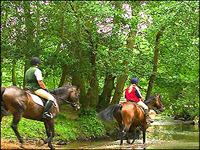
The New Forest National Park is a unique, historic landscape in Southern England, famously created by William the Conqueror in 1079 as a royal hunting ground. Today, it is a world-renowned haven for nature, characterized by ancient woodlands, the largest remaining area of lowland heath in Europe, and a mosaic of wetlands and coastline.
Where is it?
Located primarily in southwest Hampshire and extending into southeast Wiltshire, it sits on the south coast of England. It is highly accessible by road and rail, with Brockenhurst station sitting right in the heart of the forest.
What can you do there?
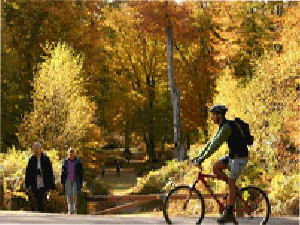
Explore Nature: Walk or cycle over 140 miles of waymarked trails through woods and over heaths.
Spot Wildlife: Observe the iconic free-roaming New Forest ponies, donkeys, and cattle. You can also visit the Bolderwood Deer Sanctuary to see fallow deer from a viewing platform.
Visit Historic Attractions:
National Motor Museum, Beaulieu: A world-famous collection of over 280 vehicles.
Buckler’s Hard: An 18th-century shipbuilding village on the Beaulieu River.
Hurst Castle: A Tudor fortress with panoramic views of the Solent.
Family Fun: Visit Paultons Park (home of Peppa Pig World) or the New Forest Wildlife Park.
Who should go and when?
Who: It is ideal for families seeking outdoor adventure, nature enthusiasts and photographers, and hikers/cyclists of all abilities. Accessible, stile-free walks are available for those with limited mobility.
When: It is a year-round destination:
Spring: For blooming bluebells and newborn foals.
Summer: Long days for picnics and watersports on the coast.
Autumn: For vibrant leaf colours and the famous “pannage” season, when pigs are released to eat acorns.
Winter: For quiet, frosty trails and star gazing.
What makes it unique?
The New Forest is unlike other UK parks due to its ancient commoning system. Local “commoners” still have the right to let their livestock roam free, making them the “architects of the forest” whose grazing maintains the ecosystem. It also holds the highest concentration of ancient trees in Western Europe, including some over 1,000 years old.
Benefits of visiting
Health & Well-being: Spending time in the forest can boost the immune system and reduce stress. The “Green Health Hub” provides resources for using the forest as a natural health service.
Environmental Impact: The park acts as a vital carbon sink, helping to fight climate change.
Educational: Visiting helps people learn about and value rare species—like the Dartford warbler or sand lizard—found nowhere else in the UK.