

Ask UK Holiday Breaks
Tell us where you're going, who you're travelling with, or what you'd like to do.
Uffington White Horse
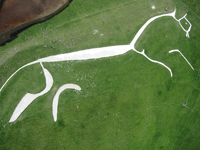
The Uffington White Horse is a stunning prehistoric hill figure carved into the steep chalk slopes of White Horse Hill in Oxfordshire, England. It is the oldest chalk carving in Britain, dating back over 3,000 years to the Bronze Age.
What to See and Do
When you visit, you aren’t just looking at a piece of art; you are stepping into an ancient landscape.
- The Horse: Up close, the horse is so large (110 metres long) that it becomes abstract. To see the full shape, you have to view it from across the valley, but walking along its borders allows you to appreciate the scale and the gleaming white chalk.
- Dragon Hill: A small, flat-topped hill just below the horse where legend says St George slew the dragon.
- Uffington Castle: The remains of an Iron Age hillfort surround the summit, offering massive earthwork banks to walk along.
- The Manger: A dramatic, rippling glacial valley right next to the horse that looks like giant steps.
Visitor Experience
- Average Stay: Most people spend 1 to 2 hours here. If you enjoy hiking or photography, you could easily stay for half a day.
- Who it’s for: It is perfect for hikers, dog walkers, and history buffs. Families often enjoy the wide-open space for children to run around.
- Who might be bored: If you prefer high-tech museums, gift shops, or structured entertainment, you might find it “just a field.” There are no visitor centres or interactive screens here—it is pure nature and history.
The Best Time to Visit
- For the views: Choose a clear, sunny day. On a crisp afternoon, you can see across six different counties.
- For peace: Arrive early in the morning or late in the evening. Sunset at the hillfort is spectacular and usually very quiet.
- Weather: It is very exposed. If it’s windy or raining, there is absolutely no shelter, so dry days are much more comfortable.
Unique Features
What makes this place special is its mystery. Unlike other chalk figures, this one is minimalist and “fluid,” looking remarkably modern despite being thousands of years old. It is also one of the few places where you can stand within an ancient hillfort and a Bronze Age masterpiece simultaneously.
Budget and Memberships
The site is free to enter, making it incredibly cost-effective for those on a tight budget.
- Parking: The car park is managed by the National Trust. While it is free for National Trust members, non-members usually have to pay a small fee via a machine or app.
- Savings: Since there is no entry fee for the hill itself, the best way to save money is to bring your own supplies. There are no “Blue Light” or “Clubcard” discounts applicable to the land, but an annual National Trust membership is worth it for families who plan to visit multiple heritage sites throughout the year to avoid recurring parking costs.
Practical Advice
- Clothing: Wear sturdy walking shoes or boots. The grass can be very slippery when damp, and the slopes are steep. Bring a windbreaker or extra layer, as it is always breezier at the top.
- Food: There are no cafes on the hill. Bring a picnic and plenty of water. It is a fantastic spot for an outdoor meal, provided you take your litter home.
- Facilities: Facilities are very limited; there are usually basic toilets near the car park, but don’t expect luxury.
Nearby Enhancements
To round off your trip, the nearby village of Uffington (about a 5-minute drive) has a lovely traditional pub, The Britchcombe Farm (at the foot of the hill) often serves cream teas during warmer months, and the Tom Brown’s School Museum in the village provides great local context if you have extra time.