

Ask UK Holiday Breaks
Tell us where you're going, who you're travelling with, or what you'd like to do.
Dunnottar Castle
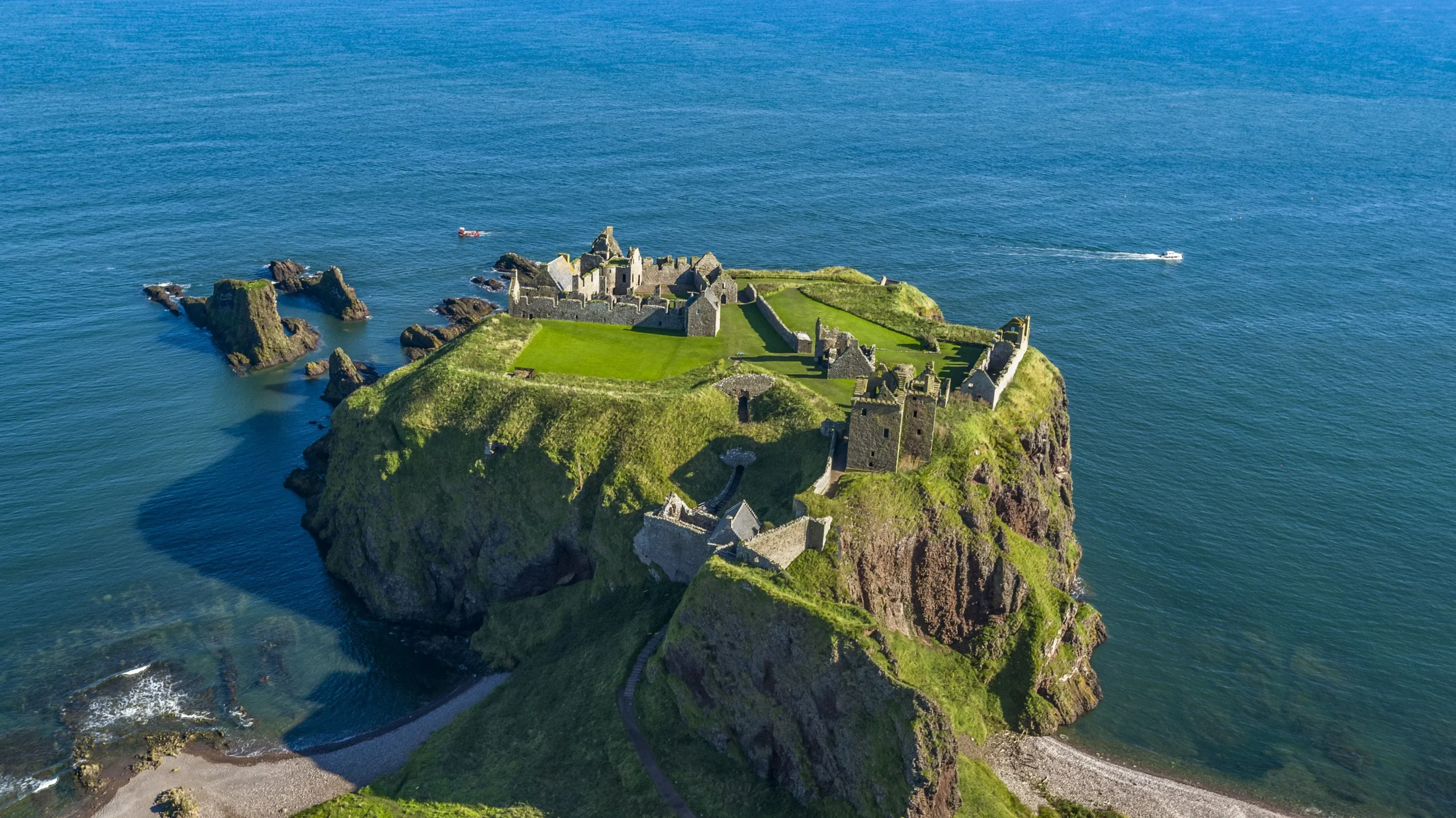
Dunnottar Castle is one of those places where the setting is every bit as memorable as the history.
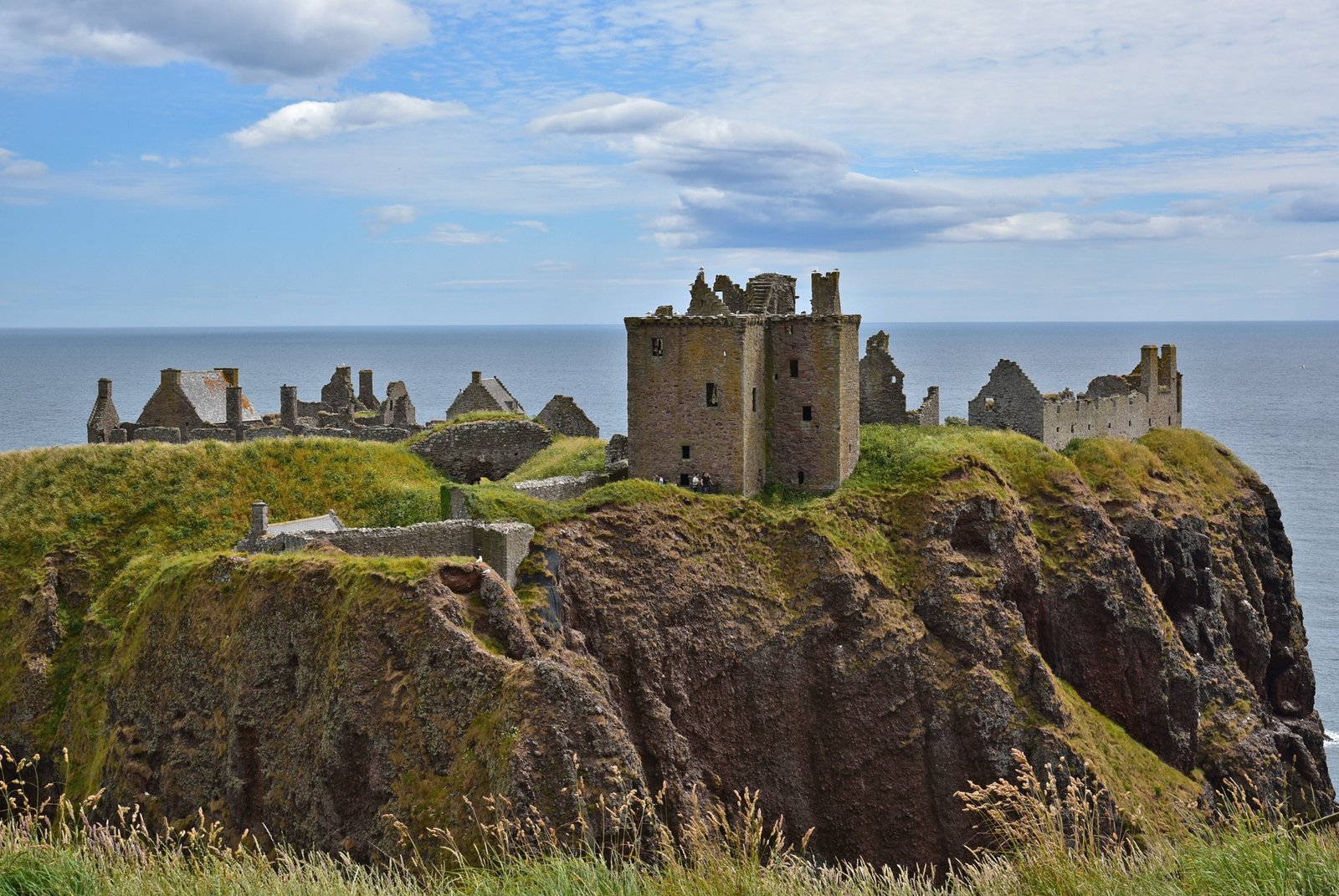
The ruined fortress sits on a rocky headland above the North Sea, surrounded by steep cliffs and reached by a dramatic path from the mainland.
Even before you reach the entrance, you can see why this was such a powerful defensive position.
Take In the View Before You Go In
Do not rush straight towards the entrance.
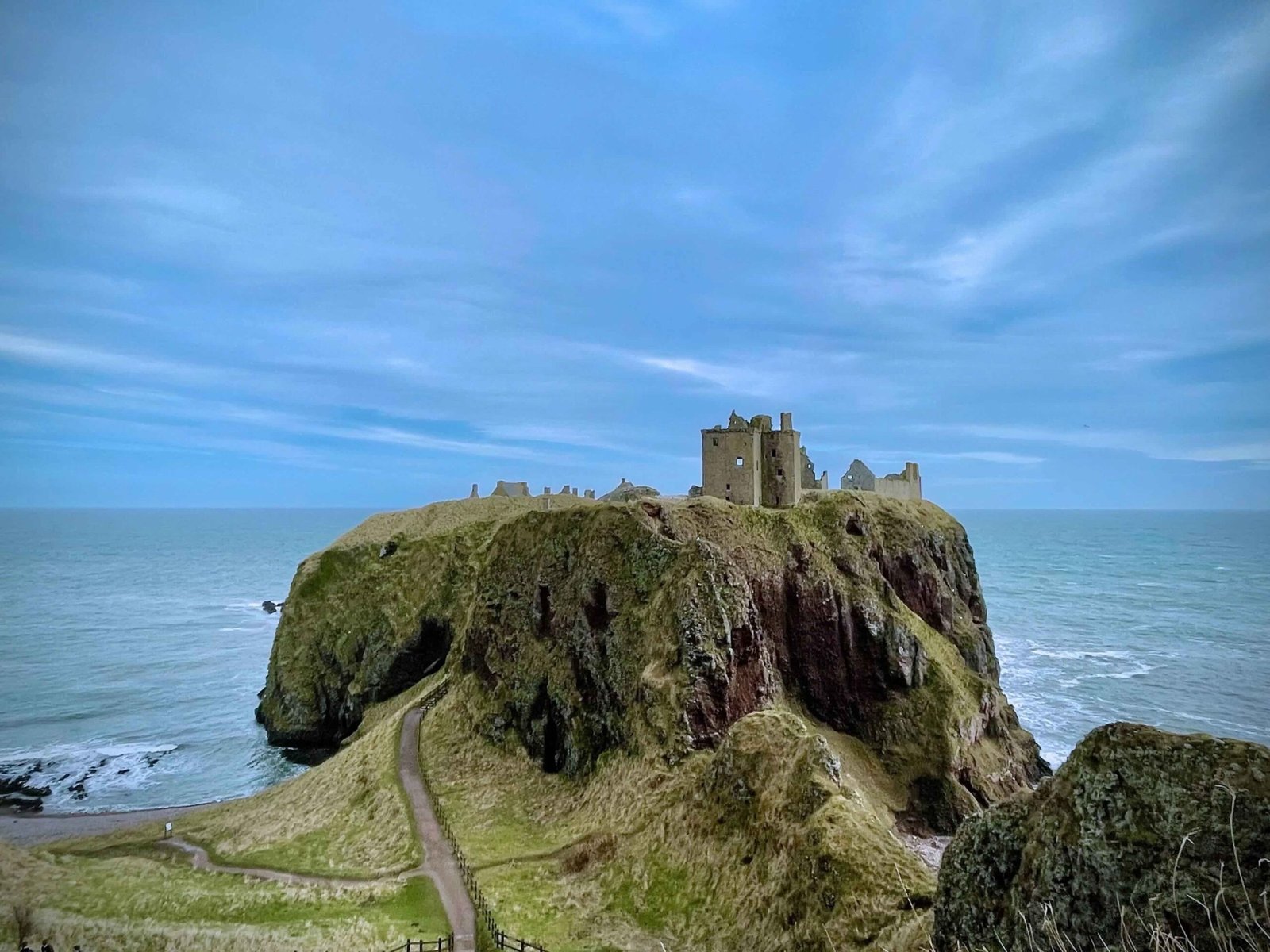
The approach gives you some of the best views of the whole castle, with the ruins rising from the isolated headland and waves breaking against the cliffs below.
It is one of the most photographed castle views in Scotland, and the changing weather can make the scene look completely different from one hour to the next.
Follow the Path Down to the Castle
Reaching Dunnottar is part of the experience.
The path drops steeply from the mainland before climbing again towards the entrance, helping you appreciate just how difficult the fortress would once have been to attack.
There are many steps and uneven surfaces, so this is not a castle where you simply stroll in from a flat car park.
Explore the Ruins
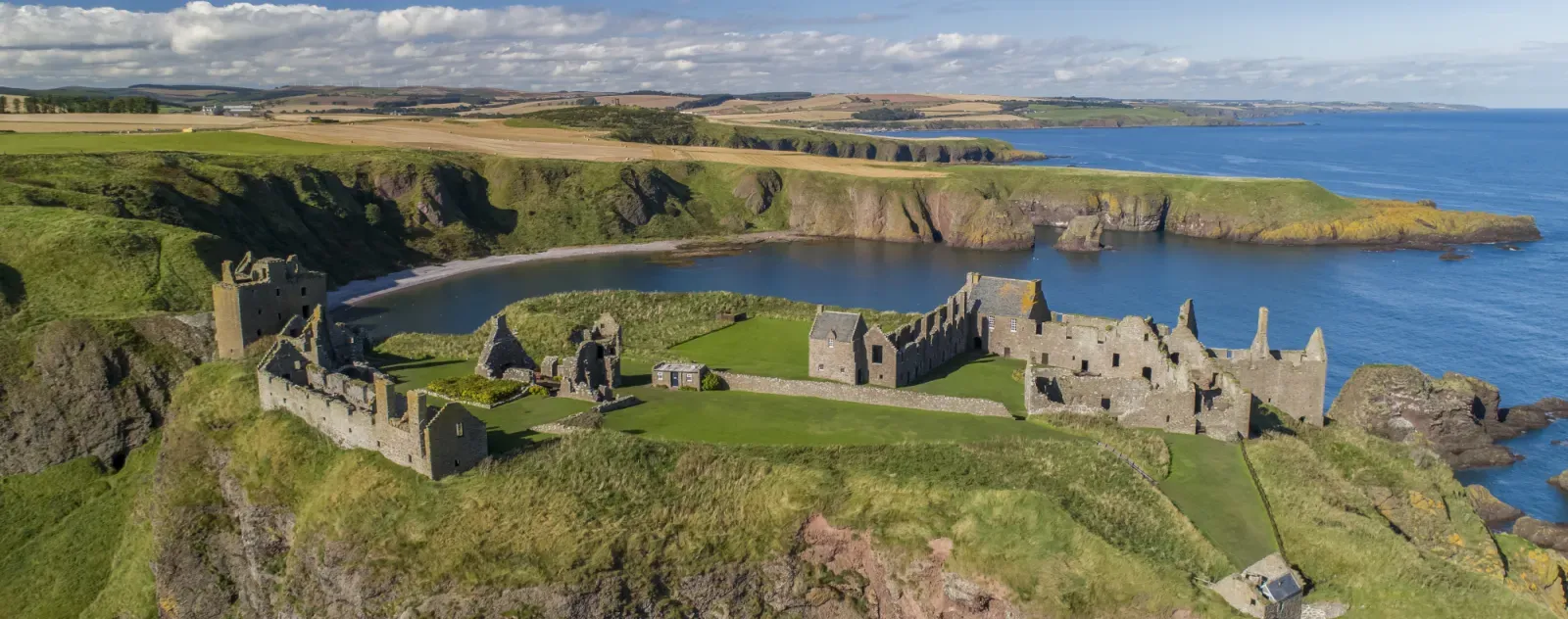
Once inside, Dunnottar is much larger than it appears from the mainland.
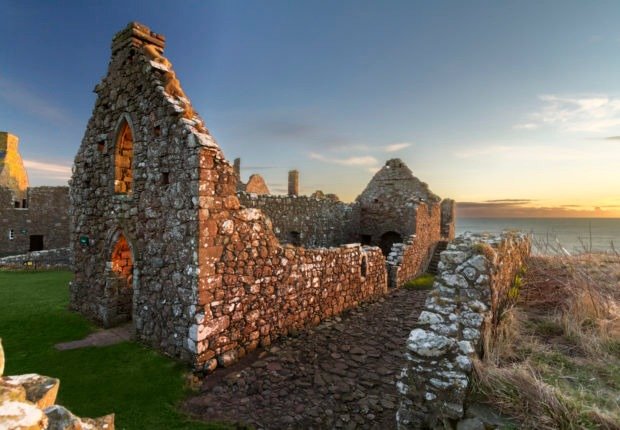
You can explore ruined chambers, defensive buildings, courtyards and the remains of structures from different periods of the castle’s long history.
Rather than one single medieval building, the site developed over centuries as its military and residential roles changed.
The combination of substantial ruins and open spaces makes it easy to imagine how busy this isolated fortress once was.
Discover the Story of the Scottish Crown Jewels
One of Dunnottar’s most famous stories comes from the 1650s.
The Honours of Scotland — the Scottish Crown Jewels — were brought here for safekeeping while Oliver Cromwell’s forces were trying to seize them.
The castle was eventually besieged, but the Honours were successfully removed and hidden before they could fall into enemy hands.
Knowing that story gives the ruined chambers much more meaning as you explore the site.
Walk Through Centuries of Scottish History
Dunnottar’s history stretches back more than a thousand years.
The site has connections with some of Scotland’s best-known historical figures, including William Wallace and Mary, Queen of Scots.
Its position on the coast also meant that it played an important military role during periods of conflict and political upheaval.
There is plenty of interpretation around the site, so you can follow the history without needing to know the story beforehand.
Look Out Across the North Sea
The views from the castle are spectacular.
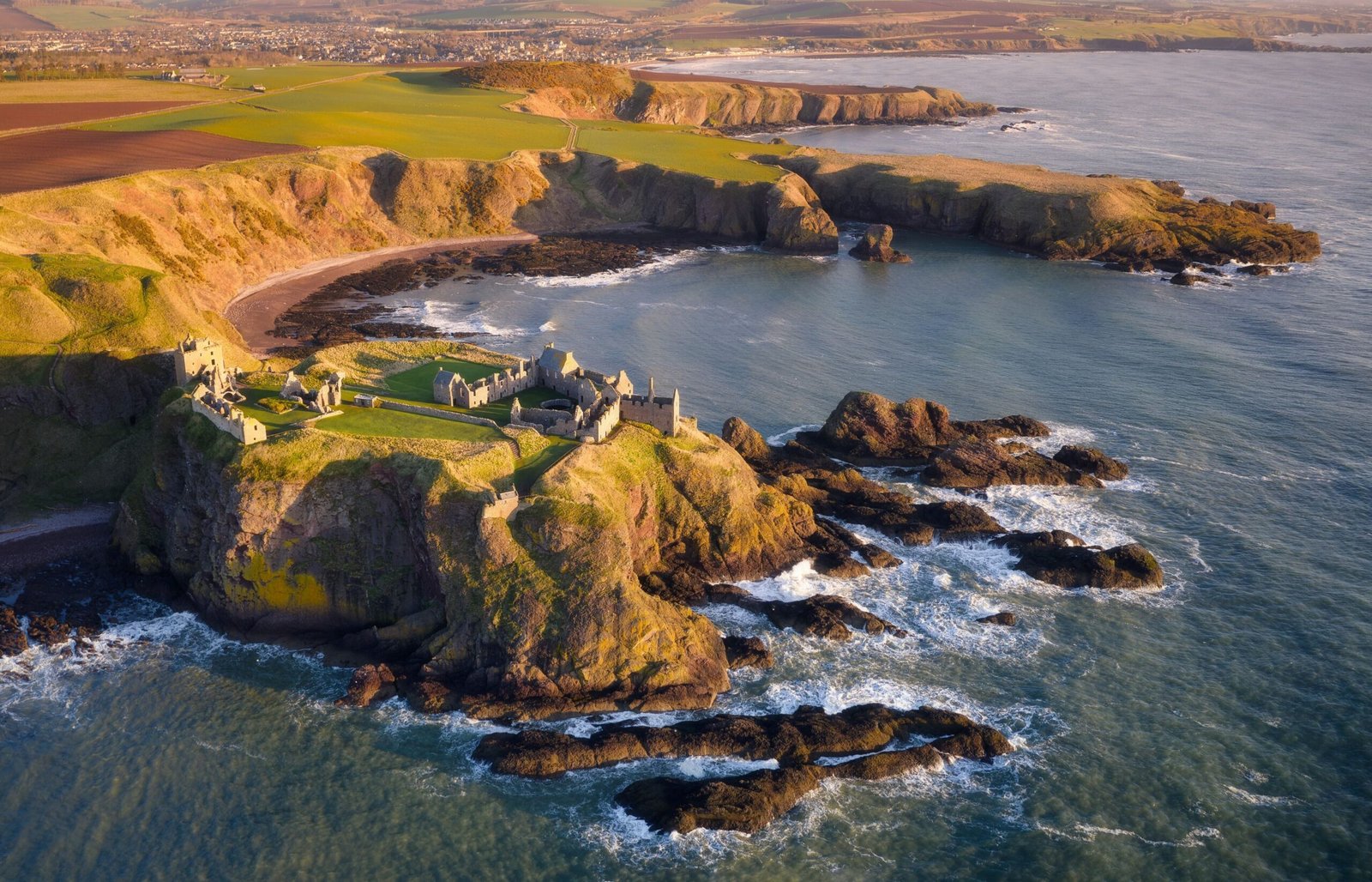
Cliffs drop sharply into the North Sea on several sides, and the exposed position gives you wide coastal views in both directions.
On a clear day you can spend almost as much time looking outward as you do exploring the ruins.
In rough weather, the location feels even more dramatic, although strong winds can also force the castle to close for safety.
Combine It with Stonehaven
Dunnottar is only around a mile and a half south of Stonehaven, so the castle works very well as part of a longer visit to the area.
Stonehaven has a harbour, cafés and places to eat, and there is a popular coastal walking route between the town and castle.
If the weather is good and you enjoy walking, arriving from Stonehaven on foot gives you excellent views of the coastline before the castle comes into sight.
A Few Useful Tips
Dunnottar Castle is near Stonehaven, Aberdeenshire AB39 2TL.
The castle is open throughout the year, although opening hours change seasonally and severe weather can cause short-notice closures. Check the official site before travelling if conditions are poor.
From April to September, the current opening hours are 9am to 6pm, with last entry at 5pm. Winter closing times are earlier. :contentReference[oaicite:1]{index=1}
Allow around one and a half to two hours for the castle itself, longer if you want plenty of time for photographs or are walking from Stonehaven.
Access is demanding. The castle sits on an isolated headland and the route includes steep paths, many steps and uneven historic surfaces. The official access guide warns that mobility access is limited because of the defensive location. :contentReference[oaicite:2]{index=2}
A free visitor car park is available near the castle, including accessible parking spaces, although the car park is relatively small. :contentReference[oaicite:3]{index=3}
Tickets can currently be bought either online in advance or at the ticket kiosk when you arrive. The site is card-payment only. :contentReference[oaicite:4]{index=4}
The location is very exposed, so take sensible footwear and a waterproof or windproof layer even when the weather looks reasonable in Stonehaven.
Stay near Stonehaven: Find hotels and cottages for visiting Dunnottar Castle and exploring the Aberdeenshire coast.