

Ask UK Holiday Breaks
Tell us where you're going, who you're travelling with, or what you'd like to do.
Best Things to Do in Northumberland
Northumberland is England’s most underrated county wild empty beaches, medieval castles, Hadrian’s Wall, dark sky stargazing and some of the least crowded countryside in the country. Here’s our complete guide.
Northumberland is, by most measures, England’s most underrated county — and that’s precisely its appeal. While the south west and Lake District fill up every summer, Northumberland’s vast empty beaches, medieval castles, Roman heritage and genuinely dark night skies remain remarkably uncrowded even at the height of the season. This is a county for people who want space, drama and authenticity.
This guide covers the very best of Northumberland — from its extraordinary castles to its Roman heritage, its dramatic coastline and the wildlife of the Farne Islands.
The Great Castles of Northumberland
Northumberland has more castles than any other English county — a legacy of its history as a contested border region. Several stand out as genuinely exceptional.
Bamburgh Castle
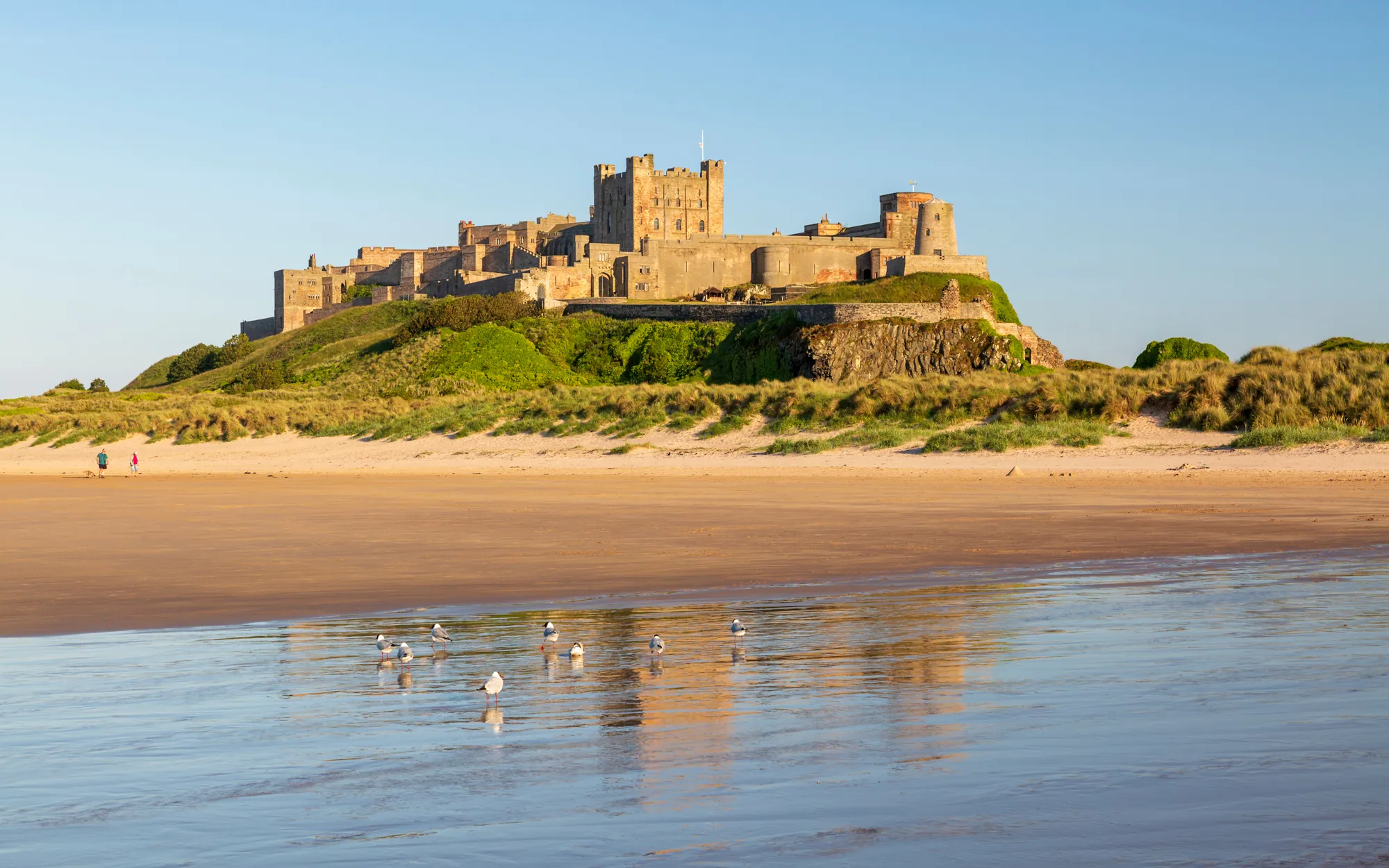
Bamburgh Castle is one of the most spectacularly sited castles in Britain — rising from a volcanic outcrop above a vast beach, visible for miles in every direction. The castle interior is impressive, but it’s the setting that makes Bamburgh unforgettable — particularly viewed from the beach below at sunset.
Alnwick Castle
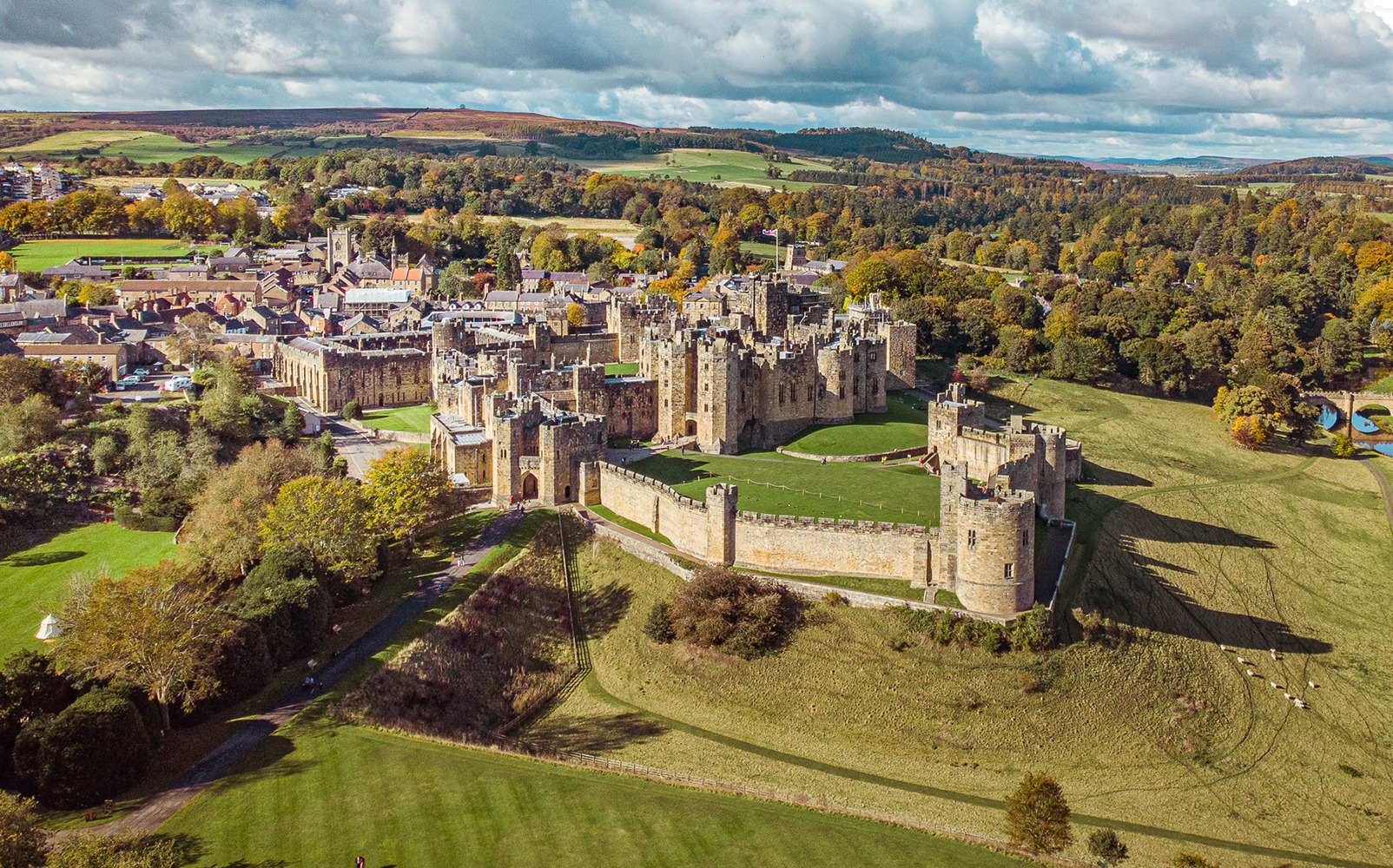
Alnwick Castle is the second largest inhabited castle in England, home to the Duke of Northumberland and famous as a filming location for the Harry Potter films. The adjacent Alnwick Garden, with its dramatic Grand Cascade and Poison Garden, is one of the most innovative gardens created in Britain in the last few decades.
Chillingham Castle
Chillingham Castle has a reputation as one of the most haunted buildings in England, with a genuinely atmospheric medieval interior and torture chamber. The adjacent Chillingham Wild Cattle Park is home to one of the most extraordinary herds in Britain — genuinely wild cattle, unchanged since medieval times and found nowhere else in the world.
Warkworth Castle
The dramatic ruins of Warkworth Castle sit on a loop of the River Coquet in the picturesque village of Warkworth — well worth combining with a walk along the river to Warkworth Hermitage, a remarkable medieval chapel carved into the riverbank rock.
Hadrian’s Wall — Rome’s Northern Frontier
Hadrian’s Wall is one of the most significant Roman monuments anywhere in the former empire — a UNESCO World Heritage Site stretching 73 miles across northern England, built to mark the northern boundary of Roman Britain. The Northumberland section is the most dramatic and best preserved, with the wall snaking across the dolerite crags of the Whin Sill.
Housesteads Roman Fort and Vindolanda are the two essential sites — Vindolanda in particular has an extraordinary collection of preserved Roman artefacts including the famous Vindolanda writing tablets, the oldest surviving handwritten documents in Britain. The Hadrian’s Wall Path, a 84-mile National Trail, follows the wall’s full length for those who want to walk it properly, though even a short section near Housesteads gives a genuine sense of the wall’s scale and ambition.
The Holy Island of Lindisfarne
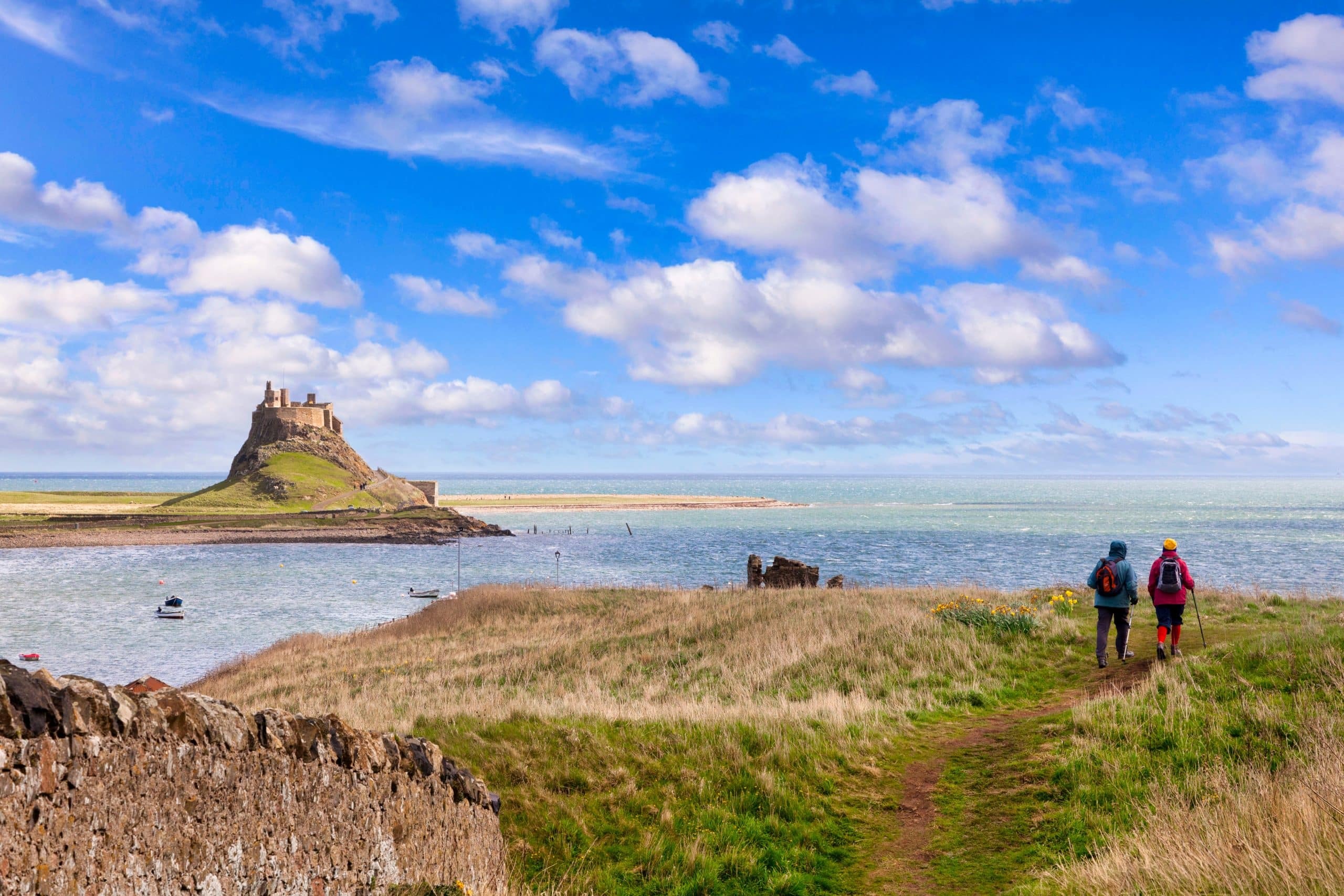
Lindisfarne, also known as Holy Island, is one of the most spiritually significant sites in England — a tidal island accessible only at certain times via a causeway that floods twice daily. The ruins of Lindisfarne Priory mark one of the earliest centres of Christianity in England, and the dramatically sited Lindisfarne Castle adds a further layer of history.
Checking the tide times before visiting is essential — cars have been stranded by incoming tides on the causeway, and the experience of being cut off on the island as the water rises is part of its unique character. Visit in spring or autumn for the quieter, more atmospheric experience.
The Farne Islands — One of Britain’s Great Wildlife Spectacles
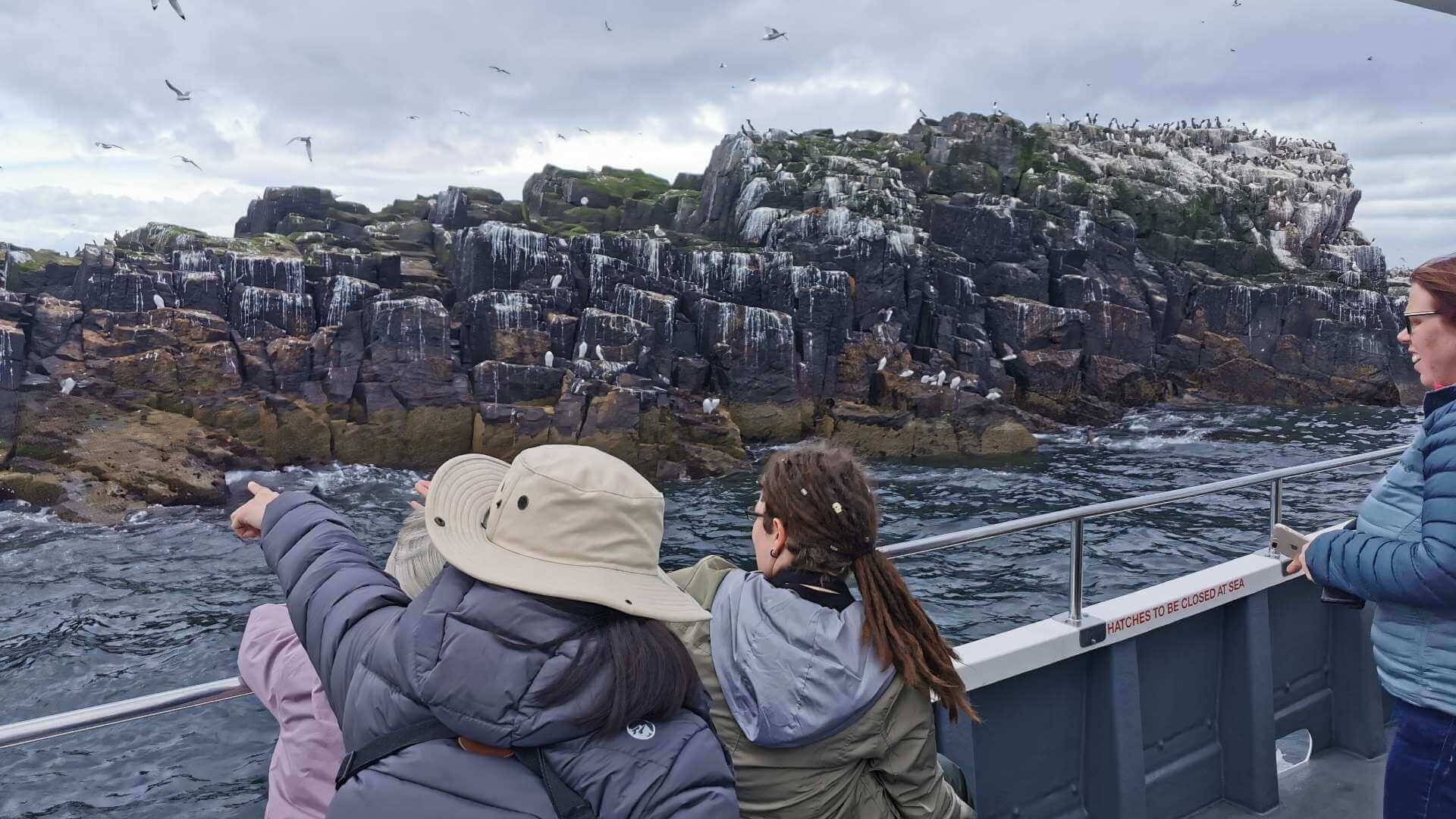
The Farne Islands, reached by boat from Seahouses, host one of the most spectacular seabird colonies in Britain — over 100,000 breeding pairs across 23 islands, including puffins, guillemots, razorbills, terns and a substantial grey seal colony. May to July, when the puffins are nesting, is the best time to visit, with boat trips landing on Inner Farne and Staple Island allowing extraordinarily close views of the birds.
The grey seal colony is present year-round and particularly active in autumn during the pupping season, when the islands’ beaches fill with seal pups.
Cragside — A Victorian Marvel
Cragside near Rothbury was the first house in the world to be lit by hydroelectric power, built by the Victorian industrialist William Armstrong. The house itself is fascinating, but the real highlight is the surrounding 1,000-acre estate — one of the largest rock gardens in Europe, dramatic landscaped grounds and outstanding walking and cycling trails through ancient woodland.
The Northumberland Coast
The Northumberland coast offers some of the most spectacular and least crowded beaches in England. Bamburgh, Beadnell, Embleton Bay and the dunes around Druridge Bay all combine vast stretches of clean sand with genuine solitude — even in August it’s possible to find a beach almost entirely to yourself.
The coastal path linking these beaches is outstanding walking country, with castles, dunes, rock pools and seabird colonies all within easy reach of one another.
Northumberland International Dark Sky Park
Northumberland National Park and the adjoining Kielder Water and Forest Park form the largest area of protected dark sky in England — officially designated Gold Tier status, the highest level of dark sky protection. On a clear night, the Milky Way is visible to the naked eye, and the Kielder Observatory runs regular stargazing events for visitors. A genuinely remarkable experience for anyone who has only ever seen light-polluted city skies.
Where to Stay in Northumberland
Northumberland has excellent self-catering options — fishermen’s cottages in coastal villages, farmhouses in the National Park and properties within walking distance of the major castles. Staying centrally gives good access to both the coast and the inland attractions.
Holiday Cottages in Northumberland — Sykes
Sykes has a good selection of Northumberland cottages from coastal properties near Bamburgh and Seahouses to countryside cottages near Hadrian’s Wall and the National Park. Search by your dates and party size to find what’s available.
Search Northumberland Cottages on Sykes →Northumberland Holiday Parks — Hoseasons
Hoseasons has a selection of holiday parks in Northumberland, many close to the coast with good facilities for families. A great base for exploring the castles, the coastline and Hadrian’s Wall.
Search Northumberland Holiday Parks →Best Time to Visit Northumberland
Spring (April to May) — wildlife at its most active, with the Farne Islands beginning to fill with nesting seabirds. Quieter than summer with excellent value accommodation.
Summer (June to August) — peak puffin season on the Farne Islands and the best weather for beach days, walking and stargazing on the longer nights. Even at peak season, Northumberland feels far less crowded than comparable coastal counties further south.
Autumn (September to October) — seal pupping season on the Farne Islands, golden light on the castles and beaches, and excellent dark sky conditions beginning as nights draw in.
Winter — the castles and Hadrian’s Wall sites remain atmospheric year-round, and clear winter nights offer the very best stargazing conditions in the Dark Sky Park.
Practical Tips for Visiting Northumberland
A car is essential — Northumberland’s attractions are spread across a large rural county with limited public transport. A car gives you the flexibility to combine the coast with Hadrian’s Wall and the National Park.
Check Lindisfarne tide times carefully — the causeway floods twice daily and the safe crossing times change every day. Always check the official tide tables before travelling.
Book Farne Islands boat trips in advance — particularly during puffin season (May to July), boat trips can sell out, especially at weekends.
Pack for genuine countryside — Northumberland is wilder and more exposed than many English counties. Good walking shoes and waterproofs are sensible whatever the season.
More to explore: Things to Do in Northumberland | North East England | Holiday Cottages | Historic Sites | More from the Blog