

Ask UK Holiday Breaks
Tell us where you're going, who you're travelling with, or what you'd like to do.
Devil’s Bridge Falls – near Aberystwyth
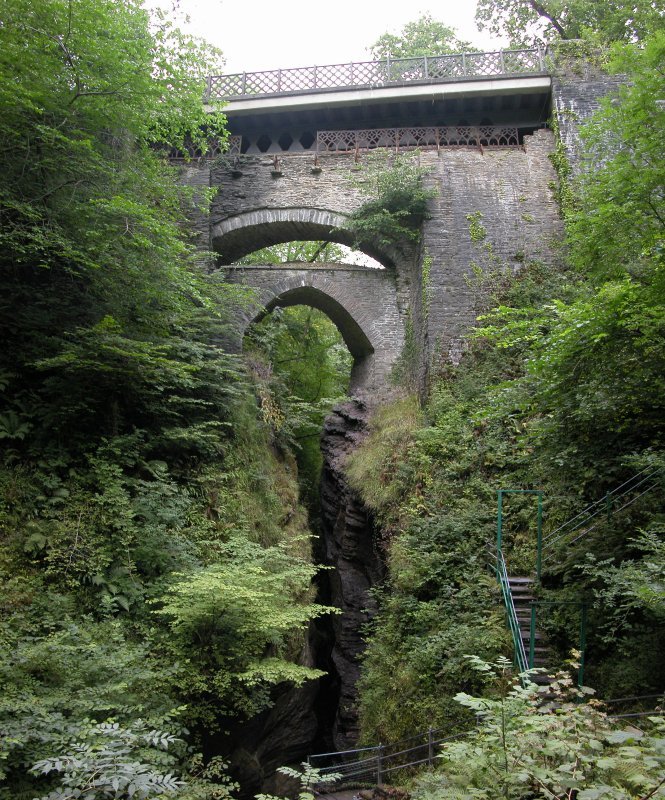
You should visit Devil’s Bridge Falls for a walk that feels far more adventurous than its short distance suggests. Three bridges rise one above another across a deep gorge, while the River Mynach crashes through woodland in a series of waterfalls below.
You can choose a short walk to see the bridges and Punchbowl or tackle the full nature trail through the gorge. The longer route includes hundreds of steep steps, close waterfall views, old woodland and a demanding climb back to the top.
Why You Should Visit
Devil’s Bridge gives you history, legend, waterfalls and a physical challenge in one compact attraction. The bridges are unusual enough to justify a visit on their own, but the wooded gorge and waterfall trail make the experience much more memorable.
Families with older children can turn the longer walk into an adventure, photographers can search for dramatic views through the trees, and visitors with less time can still enjoy the shorter route.
See the Three Bridges
Begin by looking down into the gorge at the three bridges. The lowest bridge is the oldest, with later bridges constructed directly above it as traffic and transport needs changed.
Take time to work out where one structure ends and the next begins. From some viewpoints, the bridges appear to merge into a single unusual stack of stone and metal.
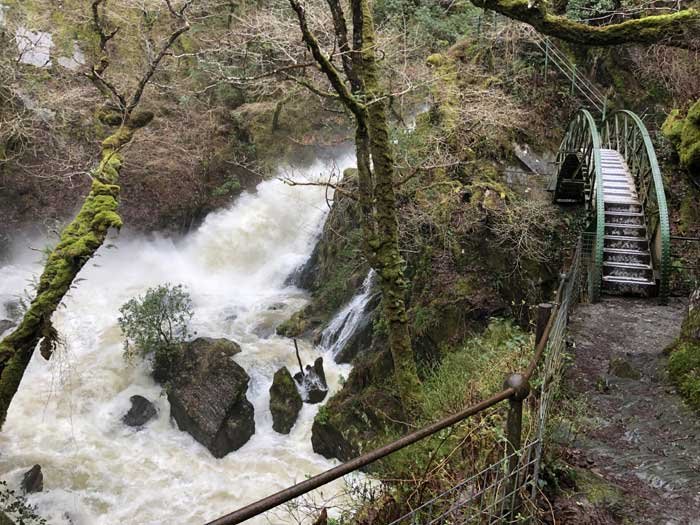
The view is especially impressive after rain, when the river below becomes louder and more powerful.
Hear the Legend
According to local legend, the first bridge was built by the Devil after he offered to help an old woman recover her cow from the opposite bank.
In return, the Devil demanded the soul of the first living thing to cross the bridge. The woman outwitted him by throwing food across the bridge so that her dog ran over first.
The story gives the site its English name and adds a playful element for children. Look for signs, recordings or guide information that explain the local version of the tale.
Choose the Short Walk
The Punchbowl and Three Bridges Walk is the better option when time, fitness or weather makes the main nature trail unsuitable.
The route takes you towards the river and a natural hollow worn into the rock by rushing water. You can also look up at the three bridges from below and appreciate how high they stand above the gorge.
Although this is the shorter choice, it still includes a substantial number of steps. Anyone with limited mobility should speak to staff before entering.
Tackle the Waterfalls Nature Trail
The longer trail descends deep into the Rheidol Gorge through ancient oak woodland before climbing back up the opposite side.
It is officially described as a difficult walk and includes more than 675 steep, uneven stone steps. The circular route takes at least 45 minutes, although many visitors will need longer for rests and photographs.
Do not rush. The effort is part of the experience, and the route becomes considerably harder when the steps are wet or covered with leaves.
Stop at the Waterfall Viewpoints
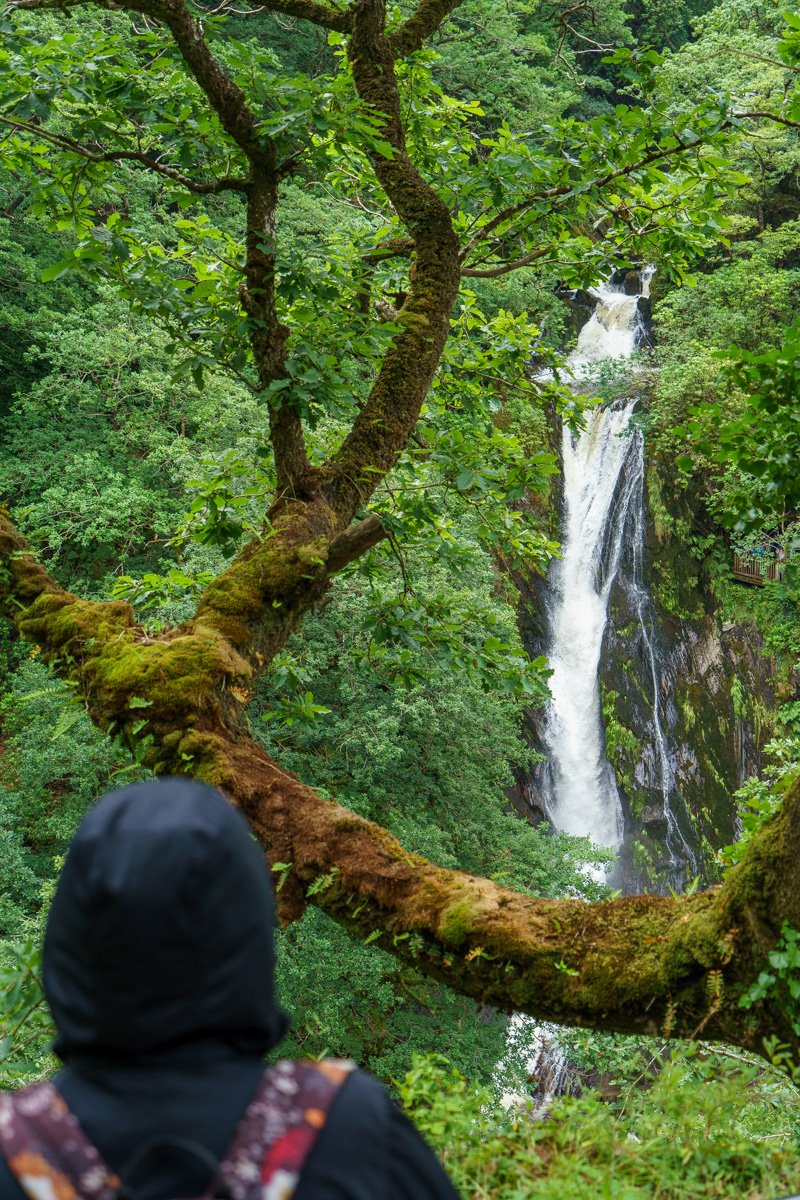
As the path descends, gaps in the woodland reveal different sections of the waterfalls. Stop at the gazebo and other resting places rather than concentrating only on reaching the bottom.
The Mynach Falls drop approximately 300 feet through the gorge in a series of cascades. After heavy rain, the noise and force of the water can be remarkable.
In drier weather, more of the rock formations may be visible. This gives you a better view of the channels and hollows shaped by centuries of flowing water.
Descend Jacob’s Ladder
One of the most demanding parts of the route is Jacob’s Ladder, a continuous flight of around 100 descending steps.
Use the handrails, take one step at a time and allow other visitors enough space. People who dislike heights may find this section particularly challenging.
Once you reach the bottom, remember that a long climb still remains on the other side of the gorge.
Cross the Humped Bridge
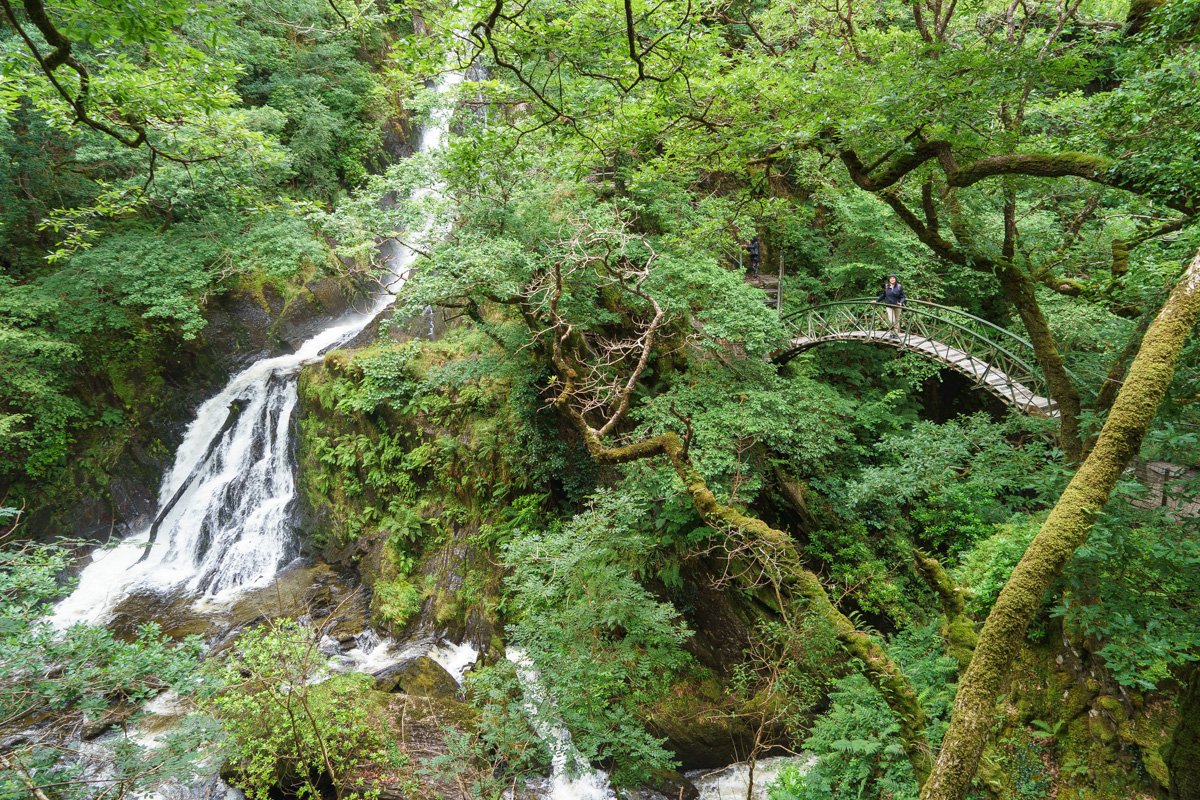
At the lower part of the trail, you cross a small humped bridge before beginning the return climb.
This is roughly the halfway point rather than the end of the difficult section. Take a short rest, enjoy the sound of the water and prepare for the ascent.
The climb gives you additional close views of the waterfalls, with several places where you can stop and catch your breath.
Find Robber’s Cave
The route passes a small cave associated with stories of an outlaw who used the gorge as a hiding place.
It adds another layer of local legend to the walk and provides a useful stopping point during the climb.
Avoid entering restricted or slippery areas around the cave. The gorge is steep, and wet rock can be hazardous.
Enjoy the Ancient Woodland
The trail passes through old sessile oak woodland filled with mosses, lichens, ferns and seasonal plants.
Spring brings fresh green leaves and woodland flowers, while autumn covers the path with rich colour. Winter and heavy rain can make the gorge feel more dramatic but also more slippery.
Listen for birds and watch for red kites above the open sections near the top of the trail.
A Good Family Adventure
Devil’s Bridge can be exciting for families, but the full trail is not suitable for every child. The large number of steep steps makes it better for older children who are confident walkers.
Younger children may be happier on the short route or at the accessible bridge viewpoint. Pushchairs cannot be taken around either of the stepped walks.
Turn the visit into a challenge by asking children to spot all three bridges, the Punchbowl, Jacob’s Ladder, the humped bridge and the best waterfall view.
Choose Your Visit
Bridge View
Use the level viewing area to see the three bridges without committing to the steep gorge walks.
Short Walk
Follow the Punchbowl route for close views beneath the bridges when the full nature trail feels too demanding.
Waterfall Adventure
Complete the full circular nature trail through the gorge, including Jacob’s Ladder and the climb back up.
Railway Day
Arrive by the Vale of Rheidol Railway, enjoy the village and choose the shorter walk if your train schedule is limited.
Arrive by Steam Train
One of the most memorable ways to reach Devil’s Bridge is aboard the Vale of Rheidol Railway from Aberystwyth.
The narrow-gauge journey climbs through the Rheidol Valley before arriving close to the waterfalls and village.
Train tickets do not include admission to the waterfall walks. Check the timetable carefully, because the full nature trail may take too long when your return train allows only a short stop.
Make the Most of Your Visit
Allow around one hour for the full trail if you are fit and do not stop for long, but two hours gives a more relaxed experience.
The shorter walk can be completed much more quickly, making it useful as part of a railway visit or a day that includes several Mid Wales stops.
Wear proper walking shoes and carry water. The attraction has no refreshment points once you are inside the gorge.
Food, Drink and Local Treats
Food and drink are available close to the attraction, including seasonal refreshments near the entrance, tearooms and the nearby hotel and pub.
The village also has a chocolate shop where visitors may be able to see handmade chocolates being produced during opening hours.
For more choice, Aberystwyth has a much wider selection of cafés, restaurants, supermarkets and takeaways.
When the Weather Changes
Rain makes the waterfalls more powerful but also makes the slate and stone steps more slippery.
Avoid the main trail during ice, high winds or severe weather. The route is unlit and should never be started close to dusk.
When conditions are poor, use the easier bridge viewpoint, enjoy food nearby and save the full gorge walk for a safer day.
Useful Local Options
Devil’s Bridge is a small village, but it has places for refreshments, accommodation and basic visitor needs around the railway and waterfall entrances.
Ponterwyd, a few miles away, has fuel and a small selection of groceries. It is sensible to fill up before exploring more remote parts of the Cambrian Mountains.
Aberystwyth provides cinemas, indoor leisure, museums, shopping and restaurants when heavy rain makes outdoor walking unsuitable.
Mobile-phone coverage is limited in and around the gorge, so arrange meeting points before members of your group separate.
Good to Know
- Devil’s Bridge Falls is at Pontarfynach, near Aberystwyth, postcode SY23 3JW.
- The attraction has two separate routes: the Waterfalls Nature Trail and the shorter Punchbowl walk.
- The main nature trail includes more than 675 steep, uneven stone steps.
- Jacob’s Ladder contains approximately 100 continuous descending steps.
- The shorter Punchbowl route also includes a substantial number of steps.
- Neither stepped walk is suitable for wheelchairs or pushchairs.
- A level tarmac viewpoint can provide wheelchair and pushchair access to views of the three bridges when the access gate is available.
- Children must be accompanied by an adult.
- Sensible walking shoes are essential because steps can be wet, slippery and uneven.
- The walks are open throughout much of the year, subject to weather and access conditions.
- Turnstile admission may operate when no attendant is on duty.
- Free visitor parking is available, with time restrictions and additional overflow areas nearby.
- Dogs must remain on leads, but the steps and turnstiles may make the walks unsuitable for some dogs.
- The trail is not lit and should not be started near dusk.
- Mobile coverage can be unreliable inside the gorge.
- Check current opening, staffing and weather information before travelling.
Who Will Enjoy Devil’s Bridge Falls?
Devil’s Bridge is ideal for walkers, families with older children, photographers, railway enthusiasts and anyone who enjoys waterfalls, legends and unusual historic structures.
The choice between a level bridge viewpoint, a short stepped walk and the full gorge trail allows visitors to select an experience that better matches their time and physical ability.
Stay near Devil’s Bridge and Aberystwyth: Find hotels, cottages and short-break accommodation for exploring the Rheidol Valley, Cambrian Mountains and Mid Wales coast.