

Ask UK Holiday Breaks
Tell us where you're going, who you're travelling with, or what you'd like to do.
Complete Guide to the Scottish Highlands
The Scottish Highlands offer some of the most dramatic and unspoilt landscapes in Europe — towering mountains, ancient lochs, remote castles and genuine wilderness. Here’s our complete guide to planning a Highlands trip.
The Scottish Highlands offer some of the most dramatic and unspoilt landscapes anywhere in Europe — towering mountains, deep glacial glens, ancient lochs, remote castles and a sense of genuine wilderness that’s increasingly rare elsewhere on the continent. Whether you’re drawn by the mountains, the history, the wildlife or simply the scale and drama of the scenery, the Highlands reward visitors prepared to take their time and explore properly.
This guide covers the essential Highland experiences — the must-see landmarks, the best bases for exploring, the wildlife and how to plan a trip that does justice to one of Britain’s most remarkable regions.
Loch Ness and the Great Glen
Loch Ness is the most famous loch in the world, stretching 23 miles through the Great Glen south of Inverness. Whatever you think of the legendary monster, the loch itself is genuinely spectacular — extraordinarily deep (over 700 feet in places), dark and atmospheric, with Urquhart Castle ruins on its banks offering one of the most photographed views in Scotland.
Boat trips on the loch are the classic way to experience it, and the surrounding Great Glen offers excellent walking and the chance to cycle or walk the full length of the Great Glen Way, connecting Fort William to Inverness through some of Scotland’s finest scenery.
Glencoe — Scotland’s Most Dramatic Glen
Glencoe is, by common consensus, the single most spectacular glen in Scotland — a deep, dramatic valley flanked by towering peaks, carved by ancient glaciers and steeped in tragic history (the infamous Massacre of Glencoe in 1692). The scenery here is genuinely awe-inspiring, particularly when mist clings to the surrounding peaks or snow dusts the higher ground in winter.
The Glencoe Visitor Centre, run by the National Trust for Scotland, has excellent information on walking routes for all abilities, from gentle valley floor walks to serious mountain hikes up peaks like Buachaille Etive Mòr — one of the most photographed mountains in Scotland.
The Isle of Skye
The Isle of Skye is the largest and most visited of Scotland’s islands, and for good reason — the Cuillin mountains, the Old Man of Storr, the Quiraing and the Fairy Pools all rank among Scotland’s most extraordinary natural sights. Connected to the mainland by a bridge at Kyle of Lochalsh, Skye is easily reached but feels genuinely remote once you’re exploring its dramatic interior.
Portree, Skye’s main town, makes an excellent base, with a colourful harbour and good facilities. The island rewards slow exploration — many of its finest sights require a walk from the road, and the weather can change quickly, so allowing extra time and flexibility pays off.
Eilean Donan Castle
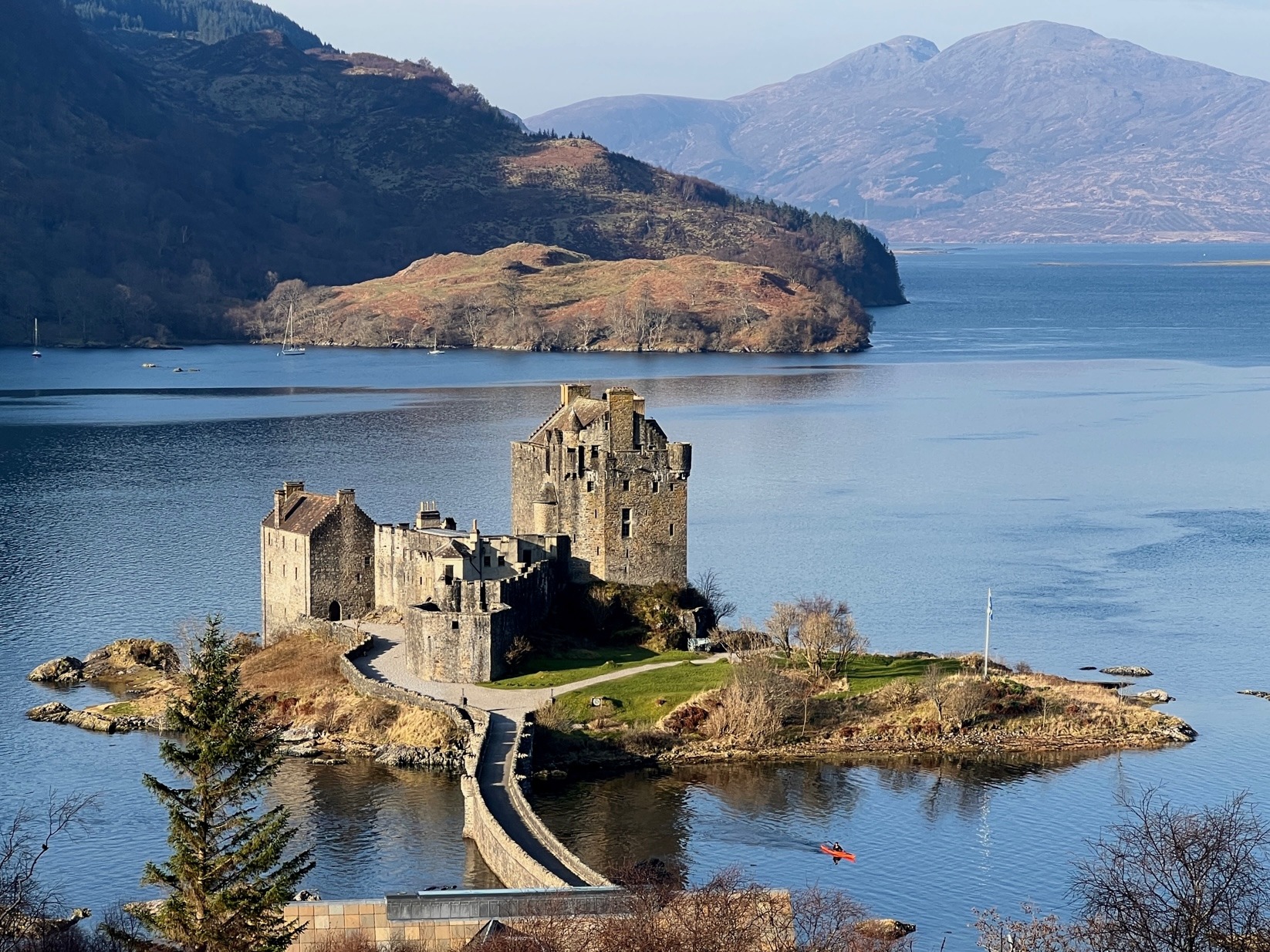
Eilean Donan Castle is one of the most photographed castles in the world, rising from a small island at the meeting point of three sea lochs near Dornie, on the road to Skye. The fully restored medieval fortress is beautiful both inside and out, and the setting — particularly at sunset — is one of the most romantic in Scotland.
Ben Nevis and Fort William
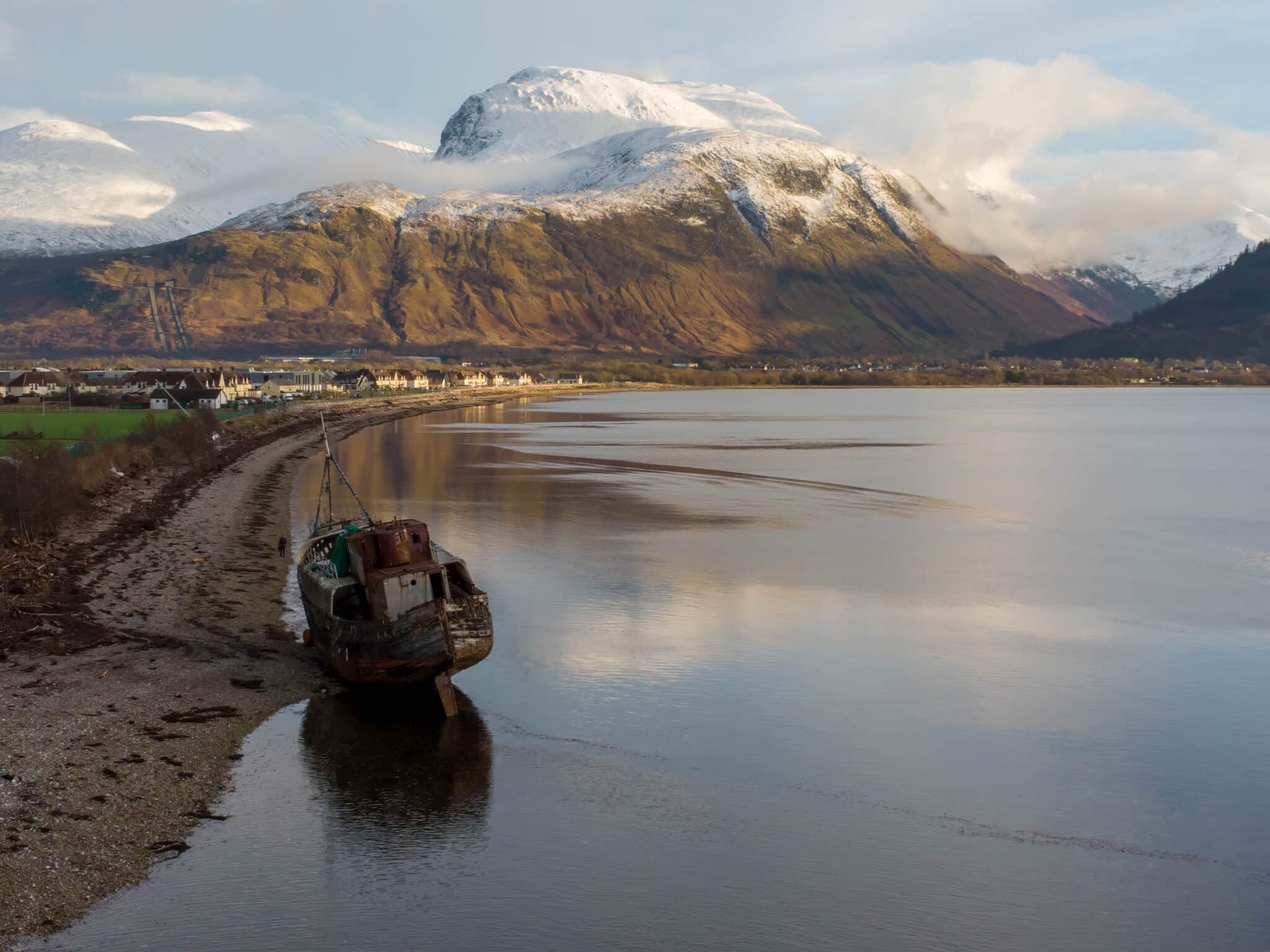
Ben Nevis is Britain’s highest mountain at 1,345 metres, and Fort William at its base styles itself the “Outdoor Capital of the UK” with good reason — it’s the gateway to some of the finest mountain walking, mountain biking and outdoor adventure in Britain. Climbing Ben Nevis via the main “Mountain Track” is achievable for reasonably fit walkers in good weather, though it should never be underestimated — proper equipment, navigation skills and weather checking are essential.
The Ben Nevis Distillery at the foot of the mountain is one of Scotland’s oldest licensed distilleries and a great way to round off a day in the area, whether or not you’ve attempted the summit.
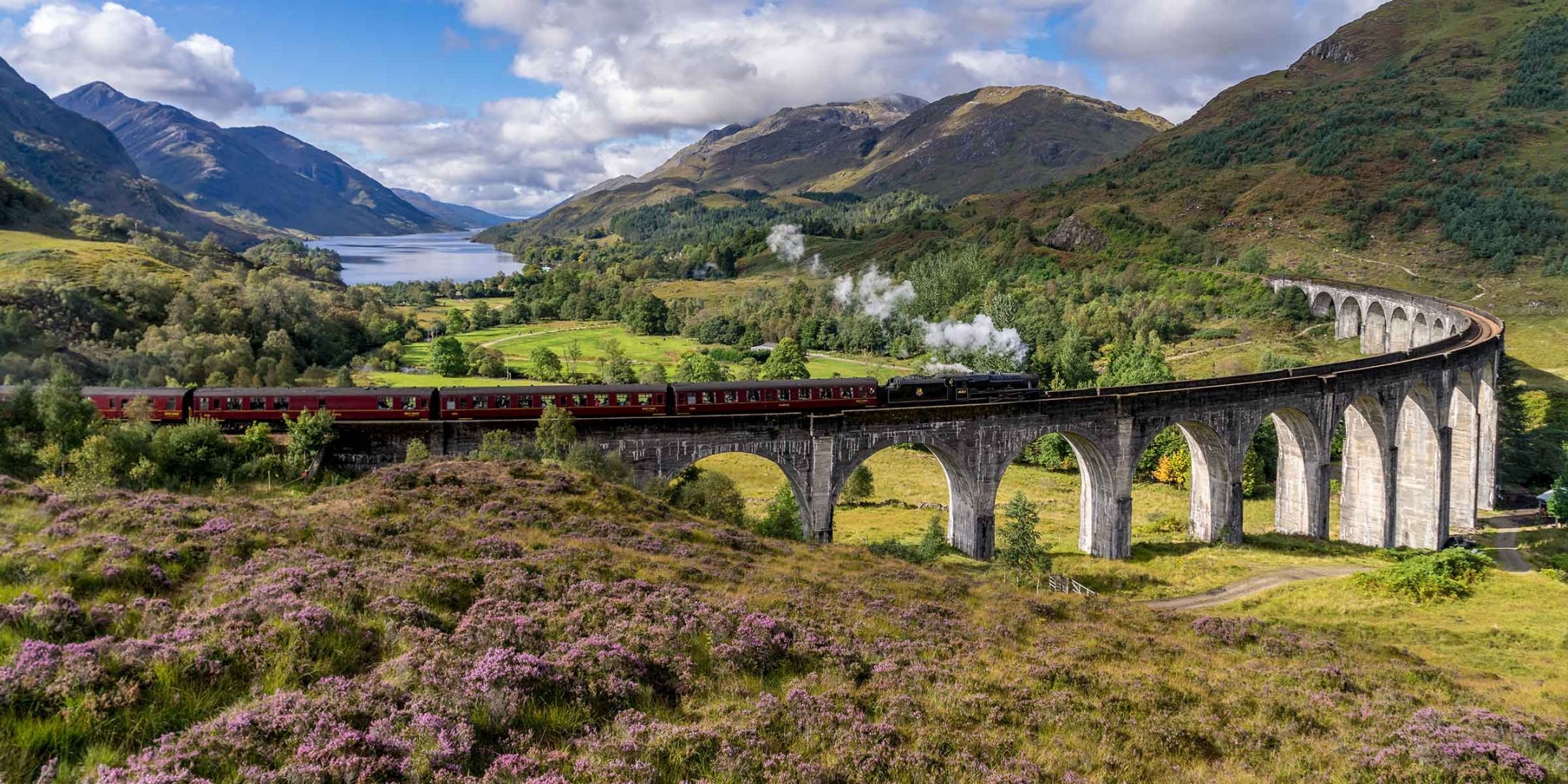
The West Highland Line, running from Fort William to Mallaig, is one of the most scenic railway journeys in the world, crossing the iconic Glenfinnan Viaduct — instantly recognisable to Harry Potter fans as the route of the Hogwarts Express.
The Cairngorms National Park
Britain’s largest National Park, the Cairngorms offer a different kind of Highland landscape — vast rolling plateaux, ancient Caledonian pine forest and some of the best wildlife watching in Scotland. Aviemore is the main hub, offering access to skiing in winter via the Cairngorm Mountain Funicular Railway and excellent mountain biking, walking and watersports in summer.
The Cairngorm Reindeer Centre is home to Britain’s only free-ranging reindeer herd, roaming the high plateau, with daily guided hill trips allowing visitors to meet and feed them — a genuinely special wildlife encounter found nowhere else in the UK.
Highland Wildlife
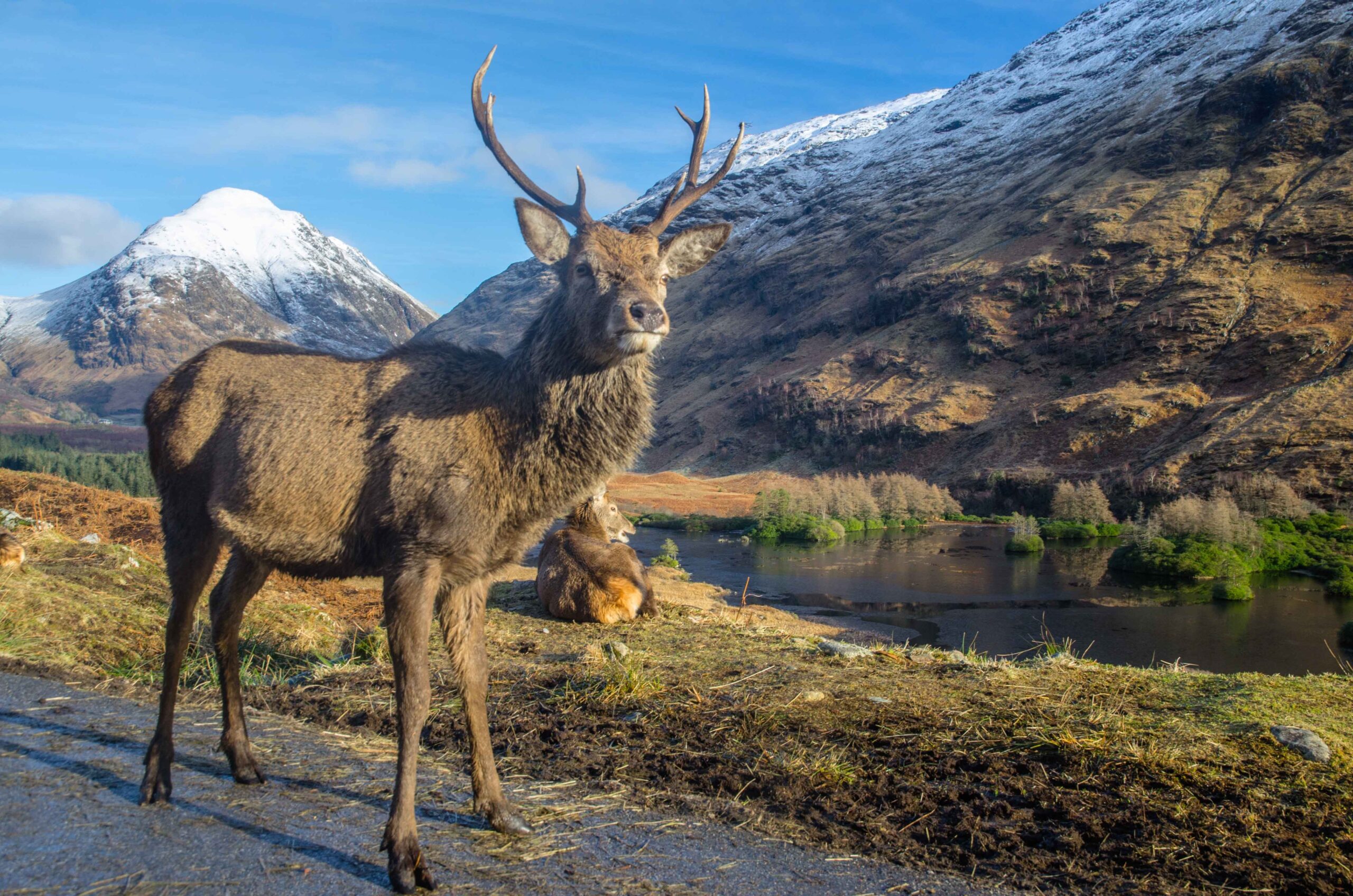
The Highlands offer some of the best wildlife watching in Britain. Red deer are common throughout, particularly visible during the autumn rutting season when stags can be heard roaring across the glens. Golden eagles, Scotland’s most magnificent bird of prey, are present throughout the region, though sightings require patience and a good pair of binoculars.
The Moray Firth coast, within reach of Inverness, is home to one of the UK’s most accessible populations of bottlenose dolphins, with regular sightings from shore at Chanonry Point and boat trips offering closer encounters. Pine martens, wildcats and red squirrels are all present in the ancient Caledonian forests of the Cairngorms, though all are elusive and require knowledge of the right locations and time of day.
The North Coast 500
The North Coast 500 is one of the world’s great road trips — a 516-mile circular route from Inverness around the northern Highland coast, taking in some of Scotland’s most dramatic and remote scenery. Sea cliffs, white sand beaches, ancient brochs and tiny fishing villages combine with extraordinary mountain scenery to create a journey that has become genuinely famous internationally since its launch in 2015.
Allowing at least five to seven days for the full route is sensible — rushing it misses the point entirely. The roads in the far north and west are often single track with passing places, so this is not a journey to be undertaken in a hurry.
Whisky in the Highlands
The Highlands are home to some of Scotland’s finest whisky distilleries, producing styles ranging from the rich, full-bodied single malts of the western Highlands to the lighter, more delicate Speyside whiskies. Many distilleries offer guided tours and tastings, making a whisky trail an excellent way to explore the region while learning about Scotland’s most famous export.
Where to Stay in the Highlands
The Highlands offer accommodation ranging from remote crofters’ cottages to characterful Highland lodges and well-equipped self-catering properties in the main towns. Inverness, Fort William and Aviemore make the most practical bases, each with good access to different parts of the region.
Holiday Cottages in the Highlands — Sykes
Sykes has a good selection of Highland cottages, from lochside properties to remote countryside retreats. Search by your dates and party size to find what’s available across the region.
Search Highland Cottages on Sykes →Highland Hotels — LateRooms
LateRooms has a strong selection of hotels across Inverness, Fort William, Aviemore and the wider Highlands. Good for comparing options and finding last-minute availability.
Search Highland Hotels on LateRooms →Best Time to Visit the Highlands
Spring (April to May) — fresh snow still on the higher peaks, wildlife becoming active and noticeably fewer visitors than summer. A beautiful and underrated time to visit.
Summer (June to August) — the most popular season, with the longest days (almost no darkness in the far north in midsummer) and the best weather for hiking and outdoor activities. Also peak midge season — pack repellent.
Autumn (September to October) — the deer rut, spectacular autumn colours in the glens and forests, and noticeably fewer tourists than summer. Many consider this the finest season for photography.
Winter — dramatic, atmospheric and genuinely beautiful, with snow-capped peaks and skiing available at the Cairngorms and Glencoe. Days are short but the quality of light is extraordinary.
Practical Tips for Visiting the Highlands
Pack for all weathers, always — Highland weather can change dramatically within hours, regardless of season. Waterproofs, warm layers and good walking shoes are essential whatever the forecast.
Allow more time than the distances suggest — Highland roads are often single track and winding. A journey that looks short on the map can take considerably longer than expected.
Midges are a genuine consideration — particularly in summer, particularly near water and in still conditions. Repellent and a midge net are worth packing for evening outdoor time.
Book ahead in summer — accommodation across the Highlands, particularly along the North Coast 500 route, books out well in advance for July and August.
More to explore: Things to Do in the Highlands and Islands | Scotland | Holiday Cottages | Hotels | More from the Blog