

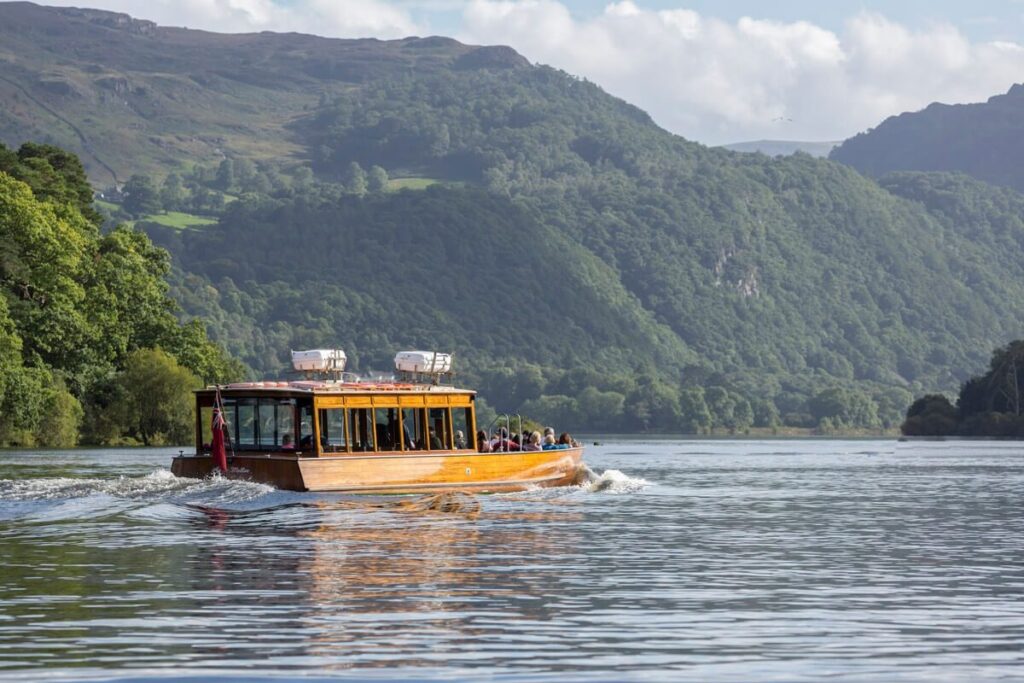
If you’ve never been to the Lake District, you’re in for a treat. And if you have been before, you already know exactly why people keep coming back year after year. England’s largest national park is genuinely one of the most beautiful places in the entire country — a landscape of shimmering lakes, dramatic fells, charming market towns, ancient stone walls and some of the most spectacular walks you’ll find anywhere in Britain.
Whether you’re planning a family holiday, a romantic escape, a walking trip with friends or simply a couple of nights away to clear your head, the Lake District delivers. Here’s our complete guide to the very best things to do.
🚢 Get Out on the Water
You simply cannot visit the Lake District without spending some time on one of the lakes. The scenery from the water is extraordinary — and there are brilliant ways to experience it whatever your age or fitness level.
Windermere Lake Cruises
Lake Windermere is England’s largest natural lake and a cruise across it is one of the most enjoyable and relaxing things you can do in the Lakes. Windermere Lake Cruises operates regular scheduled services between Ambleside, Bowness and Lakeside, with hop-on hop-off tickets that let you explore the lakeside villages at your own pace. The views across the water to the surrounding fells are absolutely beautiful — on a clear day this is genuinely one of the most scenic experiences in England.
Read More — Lake cruises in CumbriaUllswater Steamers
Ullswater is many people’s favourite Lake District lake — a long, winding stretch of water surrounded by dramatic fells on all sides. The historic Ullswater Steamers have been sailing its waters since 1859 and the journey between Pooley Bridge and Glenridding is one of the most scenic boat trips in England. Perfect for a leisurely afternoon or as transport between starting and finishing points on a fell walk.
Explore Cumbria Attractions🥾 Walking & the Fells
The Lake District is walking country above all else. From gentle lakeside strolls to serious fell walking on England’s highest peaks, there’s a walk here for every ability. Alfred Wainwright spent decades mapping 214 Lakeland fells in his famous pictorial guides — and ticking them off is a lifetime’s project for many enthusiastic walkers.
Scafell Pike — England’s Highest Mountain
At 978 metres, Scafell Pike is the highest point in England — and reaching the summit is on many people’s bucket lists. The most popular route starts from Wasdale Head and takes around 4-5 hours for the round trip. It’s a challenging but very achievable walk for anyone with reasonable fitness and proper walking boots. The views from the top — on a clear day — are extraordinary. England, Scotland, Wales and Ireland are all visible simultaneously.
Catbells — Perfect for Families
If Scafell Pike sounds a bit ambitious, Catbells is the perfect alternative — one of the most popular and rewarding walks in the whole Lake District, and very achievable for families with children. Starting from the western shore of Derwentwater near Keswick, the summit at 451 metres offers stunning panoramic views over the lake and surrounding fells. Allow around 2-3 hours for the return trip. The descent via Little Town makes for a classic circular route.
Grasmere & the Wordsworths
The beautiful village of Grasmere was home to William Wordsworth and his sister Dorothy, and the landscape here inspired some of the greatest poetry in the English language. Dove Cottage, where Wordsworth lived from 1799-1808, is open to visitors and is a fascinating glimpse into the life of the poet and his circle. The village itself is lovely — and the famous Sarah Nelson’s Gingerbread Shop has been making its unique recipe since 1854.
Explore Rydal Mount and William Wordsworth🐰 Beatrix Potter Country
The World of Beatrix Potter — Bowness-on-Windermere
Beatrix Potter wrote and illustrated the Peter Rabbit books while living in the Lake District, and the landscape of the area is woven through every page. The World of Beatrix Potter attraction in Bowness brings her characters to life brilliantly — perfect for young children who love the stories. Hill Top, her farmhouse in Near Sawrey, is maintained by the National Trust and looks almost exactly as it did when she lived and worked there. A magical place for any Beatrix Potter fan.
Read More — Beatrix Potter in the Lake District🏰 Historic Attractions
Muncaster Castle
Perched dramatically above the Esk Valley with views stretching to the sea, Muncaster Castle is one of Cumbria’s most atmospheric historic houses — and reputedly one of the most haunted buildings in England. The castle has been home to the Pennington family for 800 years and is open to visitors, with beautiful gardens, an owl centre and fascinating ghost tours. A brilliant and slightly spine-tingling addition to a Lake District visit.
Read More — Muncaster CastleCarlisle Castle & Cathedral
On the northern edge of Cumbria, the city of Carlisle has an extraordinary history as a frontier town between England and Scotland. Carlisle Castle has watched over the city for nearly 900 years — Mary Queen of Scots was imprisoned here in 1568. The nearby Cathedral is also stunning. A fascinating half-day out that gives a very different perspective on Cumbrian history compared to the National Park.
Explore Cumbria Historic Sites⚒️ Unique Experiences
Honister Slate Mine
England’s last working slate mine sits dramatically at the top of the Honister Pass — one of the most spectacular road passes in the Lake District. Honister offers underground tours of the Victorian mines, a via ferrata climbing route on the cliff face and stunning views in every direction. This is one of those genuinely unusual experiences that really stays with you. Not for the faint-hearted but absolutely brilliant for adventurous visitors.
Read More — Honister Slate MineRavenglass & Eskdale Railway
Known affectionately as “La’al Ratty” (Little Ratty), the Ravenglass & Eskdale Railway is a narrow-gauge steam railway that winds for seven miles through some of the most beautiful scenery in the Lake District. Running since 1875, it’s a wonderful way to explore the western fells without a car — and children absolutely love it. The village of Ravenglass itself is on the Cumbrian coast and is the only coastal village within the Lake District National Park.
Read More — Ravenglass & Eskdale Railway🍺 Lovely Towns & Villages to Explore
The Lake District has some genuinely wonderful towns and villages that are worth exploring in their own right — not just as bases for outdoor activities.
Keswick
The northern Lakes’ main market town — brilliantly positioned between Derwentwater and Skiddaw. Excellent independent shops, great cafés and restaurants, the Pencil Museum (surprisingly good!) and easy access to some of the finest walking in the Lakes.
Ambleside
A busy, friendly town at the northern end of Windermere — the outdoor activity capital of the Lakes. Packed with walking gear shops, brilliant cafés and restaurants. The tiny Bridge House (a house built over a stream) is one of the most photographed buildings in Cumbria.
Bowness-on-Windermere
The most visited village in the Lakes — right on the shores of Windermere with the lake cruise pier, Beatrix Potter attraction and dozens of shops and restaurants. Can get busy in summer but is beautiful in the quieter months.
Grasmere
One of the prettiest villages in England — Wordsworth’s home village, surrounded by fells and with a beautiful lake just minutes away. The Sarah Nelson’s Gingerbread Shop is unmissable. Perfect for a gentle afternoon wander.
Hawkshead
A beautifully preserved medieval village with whitewashed buildings, tiny alleyways and a wonderful atmosphere. Beatrix Potter’s husband had his solicitor’s office here and there’s a small gallery dedicated to her original artwork. Largely car-free and utterly charming.
Coniston
A quieter, more laid-back village on the shores of Coniston Water — home to the Ruskin Museum and the story of Donald Campbell’s world water speed record attempts on the lake. The Old Man of Coniston fell rises dramatically behind the village.
🏕️ Where to Stay in the Lake District
Staying somewhere really special makes a Lake District break genuinely memorable. There’s a fantastic range of accommodation — from cosy lakeside cottages and boutique hotels to holiday parks and glamping sites.
Holiday Cottages in the Lake District
A self-catering cottage is the most popular choice for a Lake District break — and it’s easy to see why. Waking up to fell views, having your own garden to sit in at the end of a long day’s walking and the freedom to come and go as you please makes a cottage stay in the Lakes feel very special indeed. Sykes Cottages and Rural Retreats both have excellent selections of Lake District properties, from cosy one-bedroom hideaways to large houses sleeping 10 or more.
Search Lake District Cottages — SykesHotels in the Lake District
The Lake District has some wonderful hotels — from country house hotels with spa facilities and fine dining to welcoming inns with roaring fires and local ales. LateRooms is a great place to search for availability and compare prices across a wide range of Lake District hotels.
Search Lake District Hotels — LateRooms📅 Best Time to Visit the Lake District
Spring (March-May) — one of the best times to visit. The fells are green, the daffodils are out (very appropriate for Wordsworth country), the crowds haven’t arrived yet and the light is beautiful. Easter can be busy so book ahead if travelling then.
Summer (June-August) — the most popular time and for good reason — long days, warmest weather and everything is open. School holiday weeks can be very busy, especially in Bowness and Ambleside. Book well in advance for summer stays.
Autumn (September-October) — arguably the most beautiful time of all. The autumn colours on the fells are spectacular, the crowds thin out considerably after the schools go back and the weather is often still very pleasant. September is particularly recommended.
Winter (November-February) — the Lakes in winter has a quiet, dramatic beauty all of its own. Many attractions have reduced hours and some close entirely, but for walkers and those who love atmospheric landscapes it can be a wonderfully peaceful time to visit. Snow on the fells is genuinely stunning.
🚗 Getting There & Getting Around
By car — the most flexible option. The M6 motorway runs close to the eastern edge of the National Park and the journey from Manchester takes around 1.5 hours, from London around 4-5 hours. Note that the Lake District’s narrow country lanes can be congested in summer — try to avoid driving through the most popular spots at peak times.
By train — trains run to Windermere from Manchester (around 1.5 hours) and to Penrith and Carlisle on the West Coast Main Line. From the stations, local buses and the Windermere Lake Cruises connect the main villages.
Getting around without a car — the Lake District has reasonably good bus connections between the main villages in summer, and the lake cruises are excellent for getting between lakeside spots. The Keswick to Threlkeld cycling trail along a former railway line is a brilliant traffic-free option.
📋 Practical Tips
Book accommodation early — the Lake District is one of the most popular holiday destinations in the UK and good cottages and hotels fill up months in advance, especially for school holidays and summer weekends.
Check the weather — the Lake District is one of the wettest parts of England. Always pack waterproofs, even if the forecast looks good. Rain can arrive quickly and the fells can be very exposed. That said — the Lakes after rain, with mist on the fells and light dancing on the water — is one of the most beautiful sights in England.
Download the OS Maps app — essential for walking on the fells. The Ordnance Survey 1:25,000 maps cover the Lake District in brilliant detail. Download the relevant map tile before you go in case you lose signal on the fells.
Visit on weekdays if possible — the popular spots like Grasmere, Bowness and the Catbells car park get extremely busy on summer weekends. Visiting mid-week makes a huge difference.
The National Trust — membership gives free parking at National Trust car parks throughout the Lake District, which adds up quickly. If you visit several times a year it pays for itself very quickly.
Plan your Lake District break: Holiday Cottages • Hotels • Last Minute Breaks • All Things to Do in Cumbria
More destination guides: Back to the Blog • Explore England • North West England