

Ask UK Holiday Breaks
Tell us where you're going, who you're travelling with, or what you'd like to do.
St Andrews Cathedral
St Andrews Cathedral gives you a real sense of just how important this small coastal town once was.
These huge ruins were once the centre of the Scottish Church, drawing pilgrims from across Europe to the shrine of St Andrew and eventually becoming the largest cathedral ever built in Scotland.
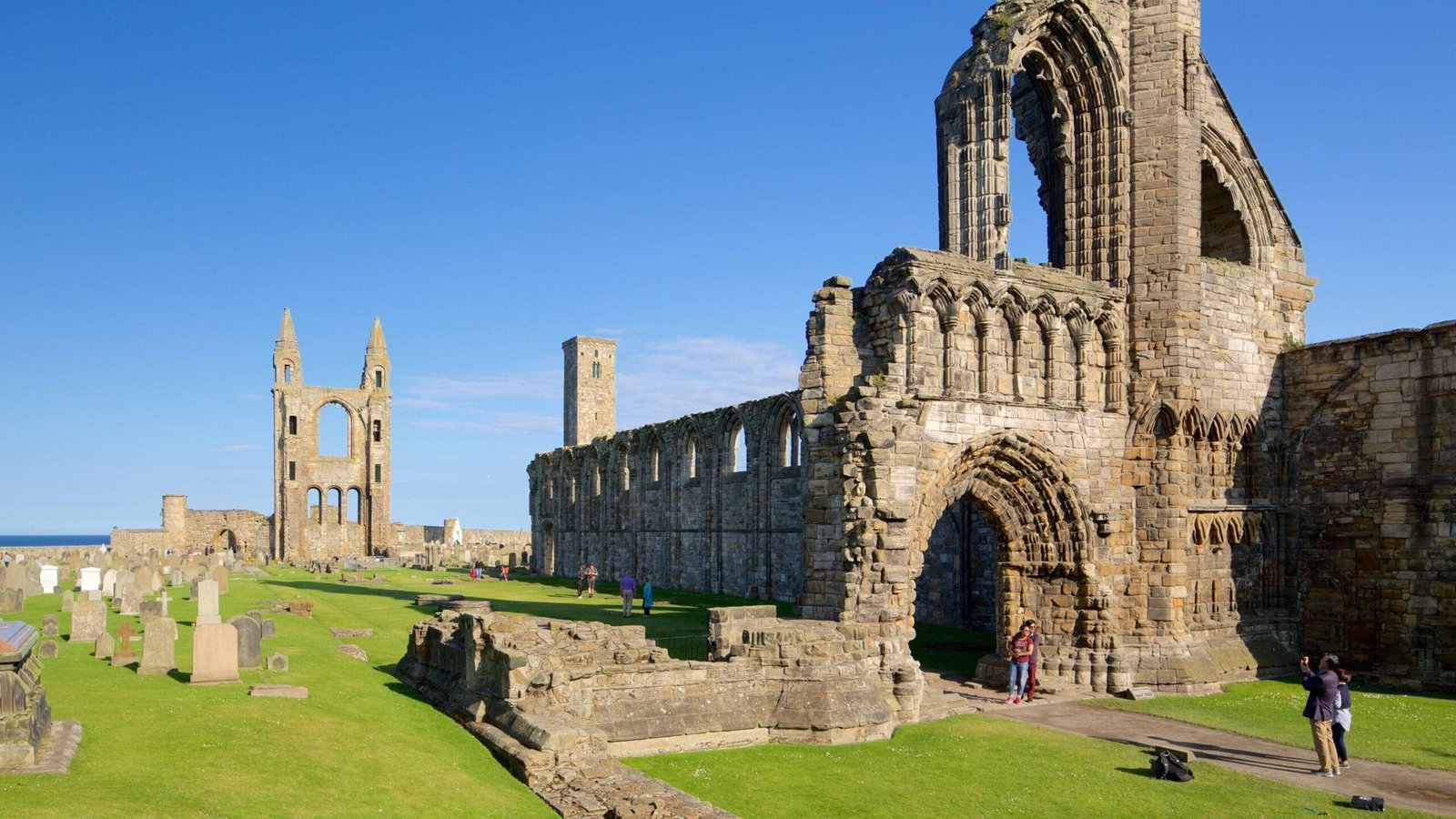
Walk Through Scotland’s Greatest Medieval Cathedral
Construction of the cathedral began in the 12th century and continued for more than 150 years.
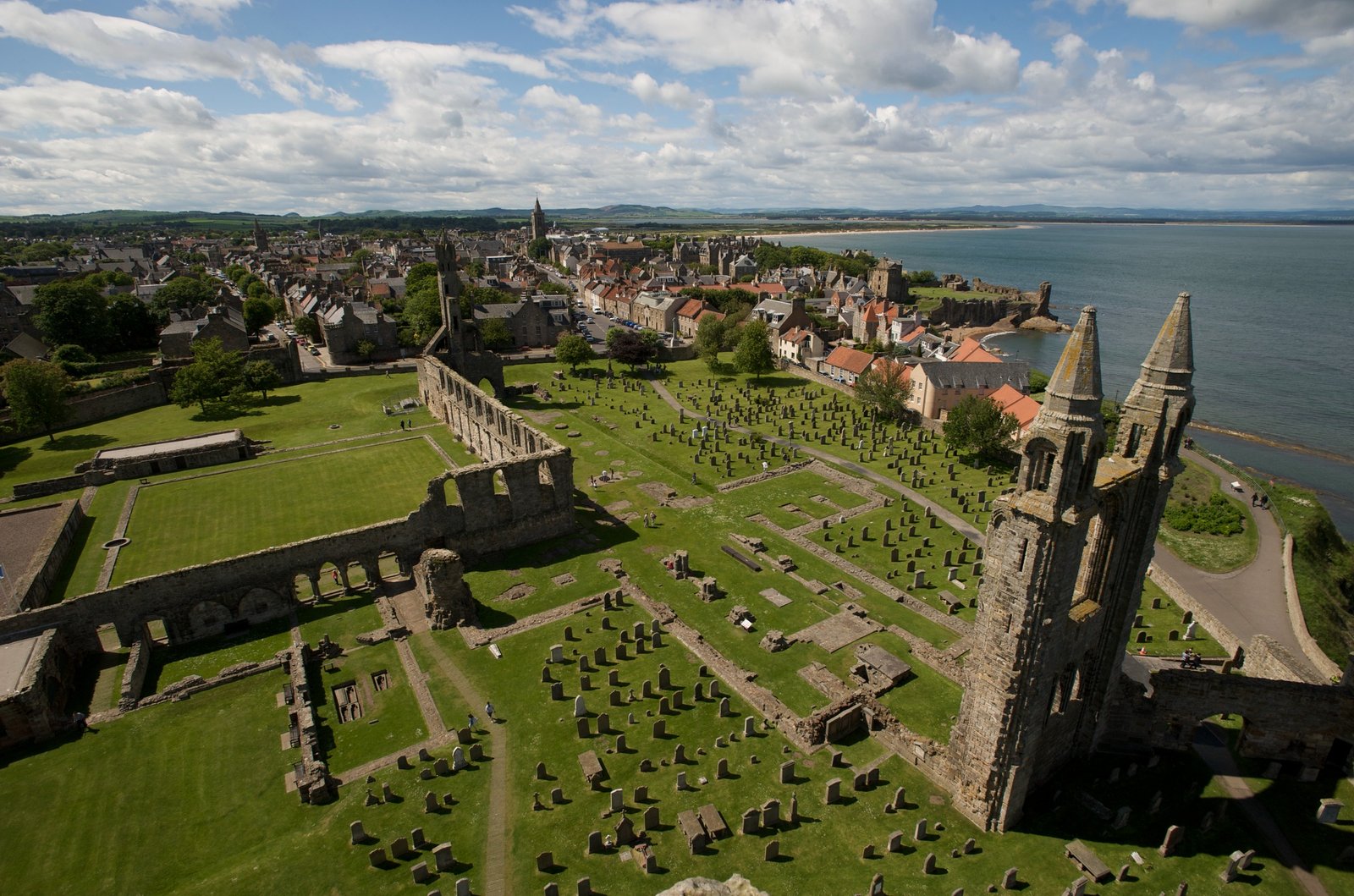
Although much of the building has disappeared, the surviving east gable, sections of the nave and the remains of the great west front still show how enormous it once was.
Walking from one end of the site to the other is probably the best way to appreciate its original scale.
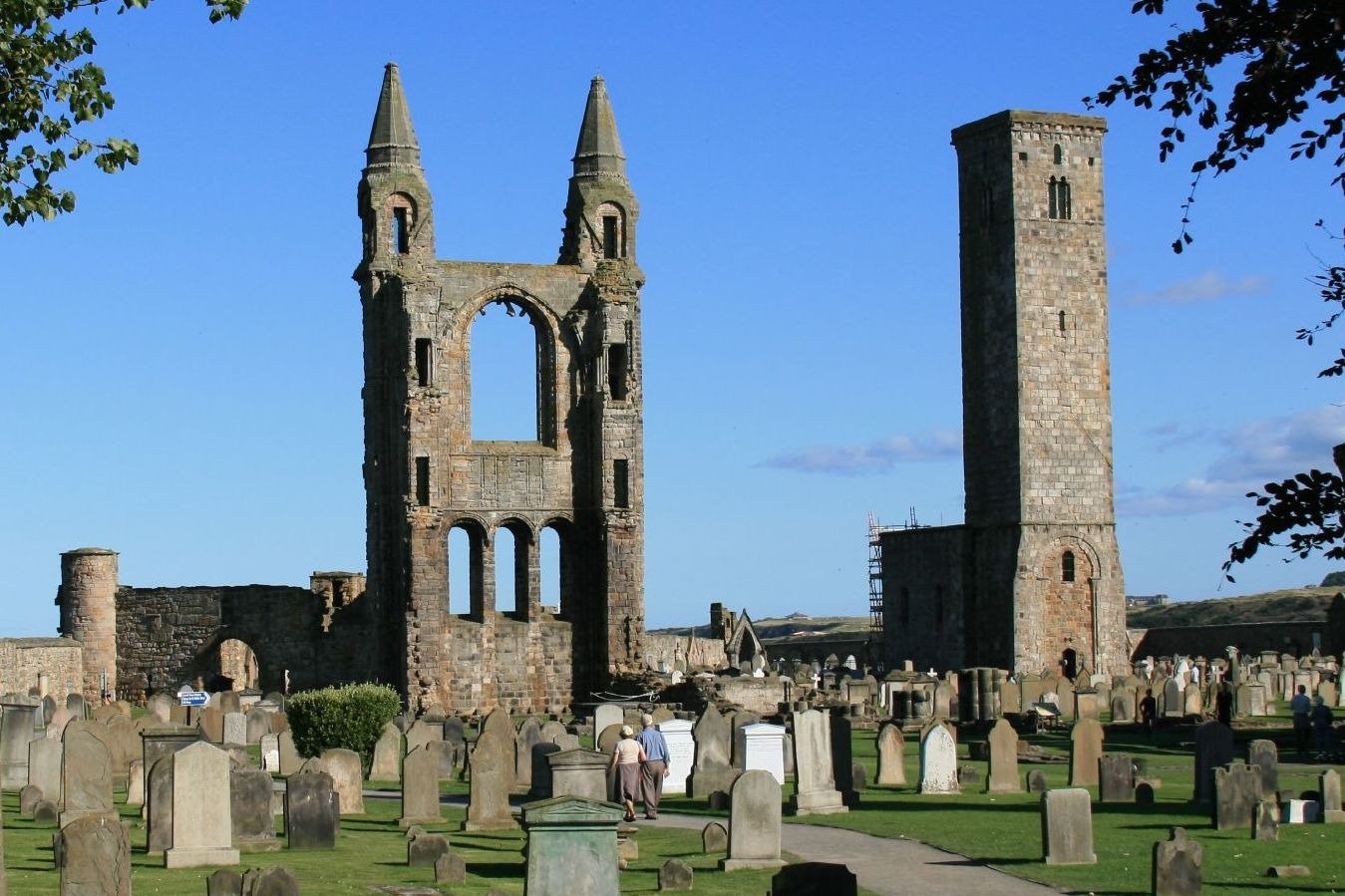
See St Rule’s Tower
St Rule’s Tower is older than the cathedral itself and rises more than 30 metres above the surrounding ruins.
It belonged to an earlier church associated with the shrine of St Andrew and may once have acted as a landmark for pilgrims approaching the town.
Even today, the tower is one of the most recognisable features of the St Andrews skyline.
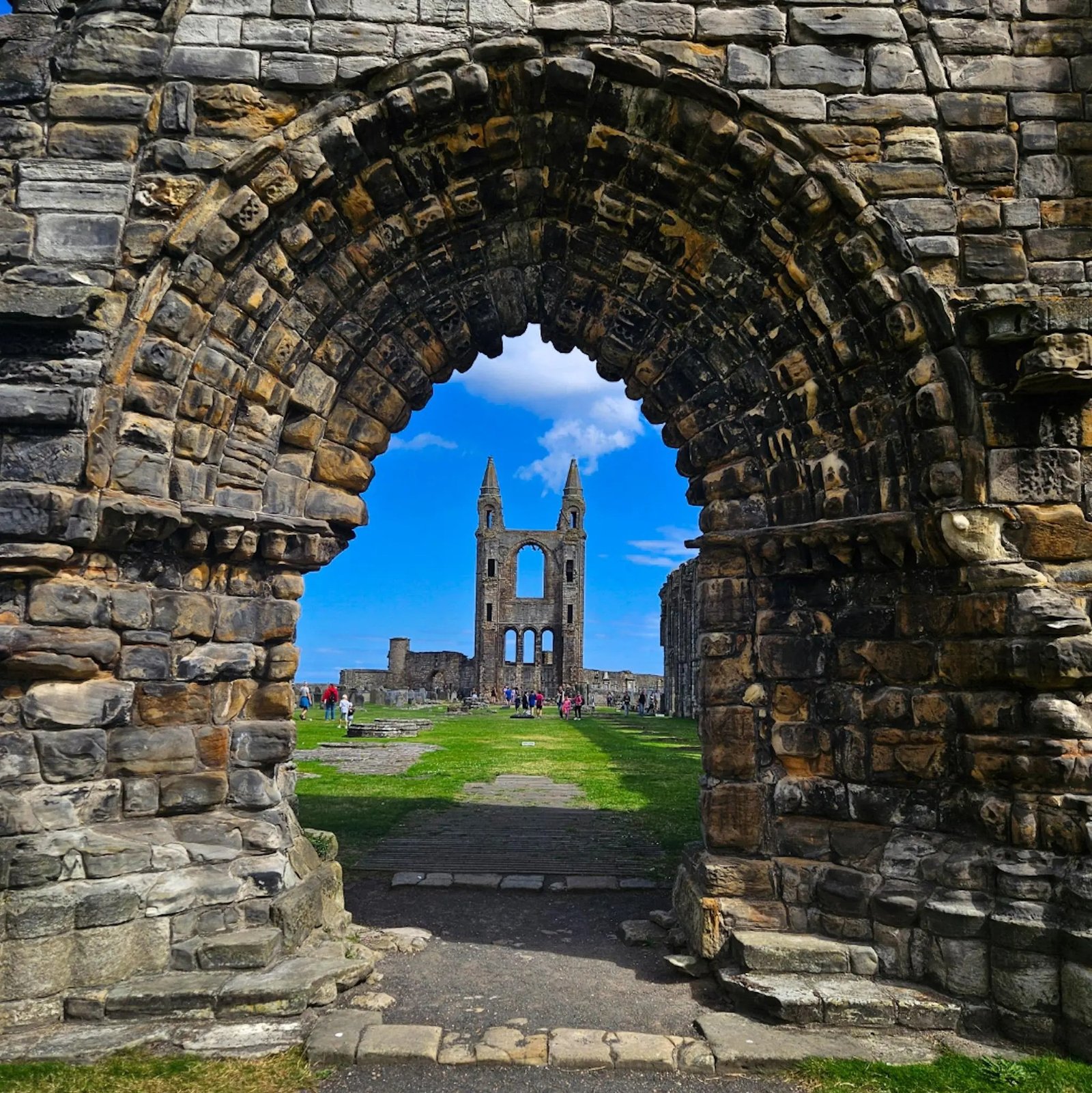
Follow the Pilgrims’ Story
For centuries, people travelled to St Andrews because the cathedral was believed to hold relics of Scotland’s patron saint.
According to tradition, St Rule brought relics of St Andrew to this part of Fife, helping establish the religious importance that eventually gave the town its name.
By the Middle Ages, St Andrews had become one of Scotland’s most important pilgrimage destinations.
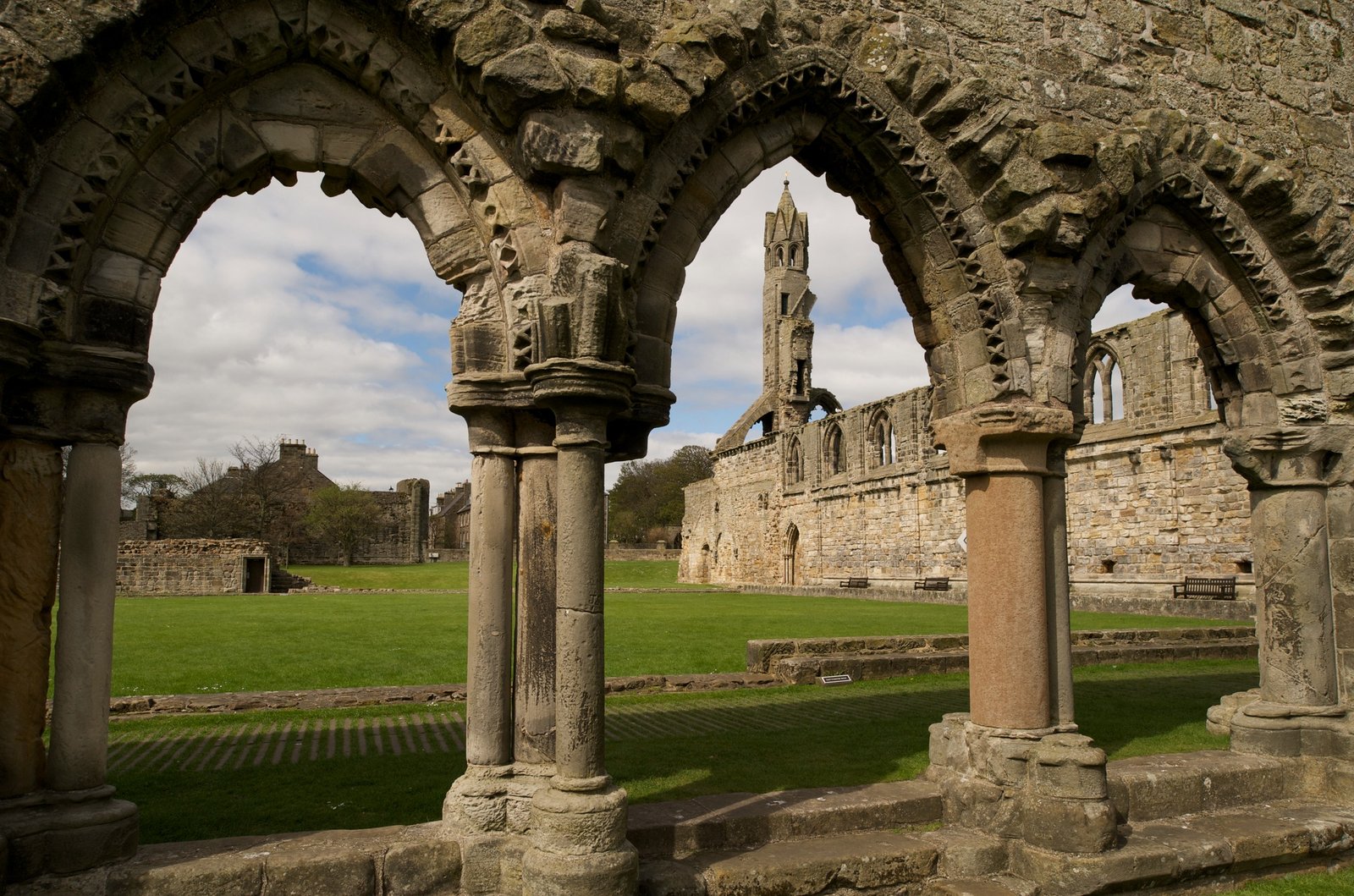
Look at the Surviving Arches and Gables
Some of the most impressive remains are the tall stone arches and gables that still rise above the grass.
They frame views across the site and make particularly good photographs, especially when you can see St Rule’s Tower or the coast through them.
The surviving masonry also shows the quality of the medieval workmanship even though only part of the original church remains.
Find the Golfing Graves
The cathedral graveyard contains centuries of local history, including the graves of some important figures from the early days of professional golf.
Old Tom Morris, one of the great names in the history of the game, is buried here alongside his son Young Tom Morris.
You can also find the grave of Allan Robertson, another pioneering professional golfer who was regarded as one of the finest players of his generation.
It is an interesting connection between the town’s medieval religious history and the sport for which St Andrews later became famous.
Walk Out Towards the Coast
The setting adds a lot to the visit.
Beyond the cathedral walls, close to the clifftop, you can see the low remains of St Mary’s on the Rock, another medieval church that once stood beside the sea.
The combination of ancient stonework, open sky and the nearby coastline gives this end of St Andrews a very different atmosphere from the busy streets around the university and golf courses.
A Few Useful Tips
St Andrews Cathedral is at The Pends, St Andrews, Fife KY16 9QL.
The cathedral grounds are currently open free of charge.
Essential conservation work is taking place, so the museum and shop are currently closed and some sections of the graveyard are fenced off.
During the main season from April to September, the grounds generally open from 9.30am, closing at 5.30pm Monday to Saturday and 5pm on Sunday.
Allow around one hour for the cathedral itself, or longer if you enjoy photography, exploring old graveyards or want to continue towards the coast.
The main entrance gives level access onto a compacted gravel path, although there are steps, raised thresholds, gravestones and uneven surfaces around parts of the site.
There is no dedicated visitor car park, but on-street parking is available nearby.
St Andrews Castle is only a short walk away, so the two historic sites work particularly well together.
Stay in St Andrews and Fife: Find accommodation for exploring the cathedral, historic town, beaches and wider Fife coast.