

Ask UK Holiday Breaks
Tell us where you're going, who you're travelling with, or what you'd like to do.
Melrose Abbey
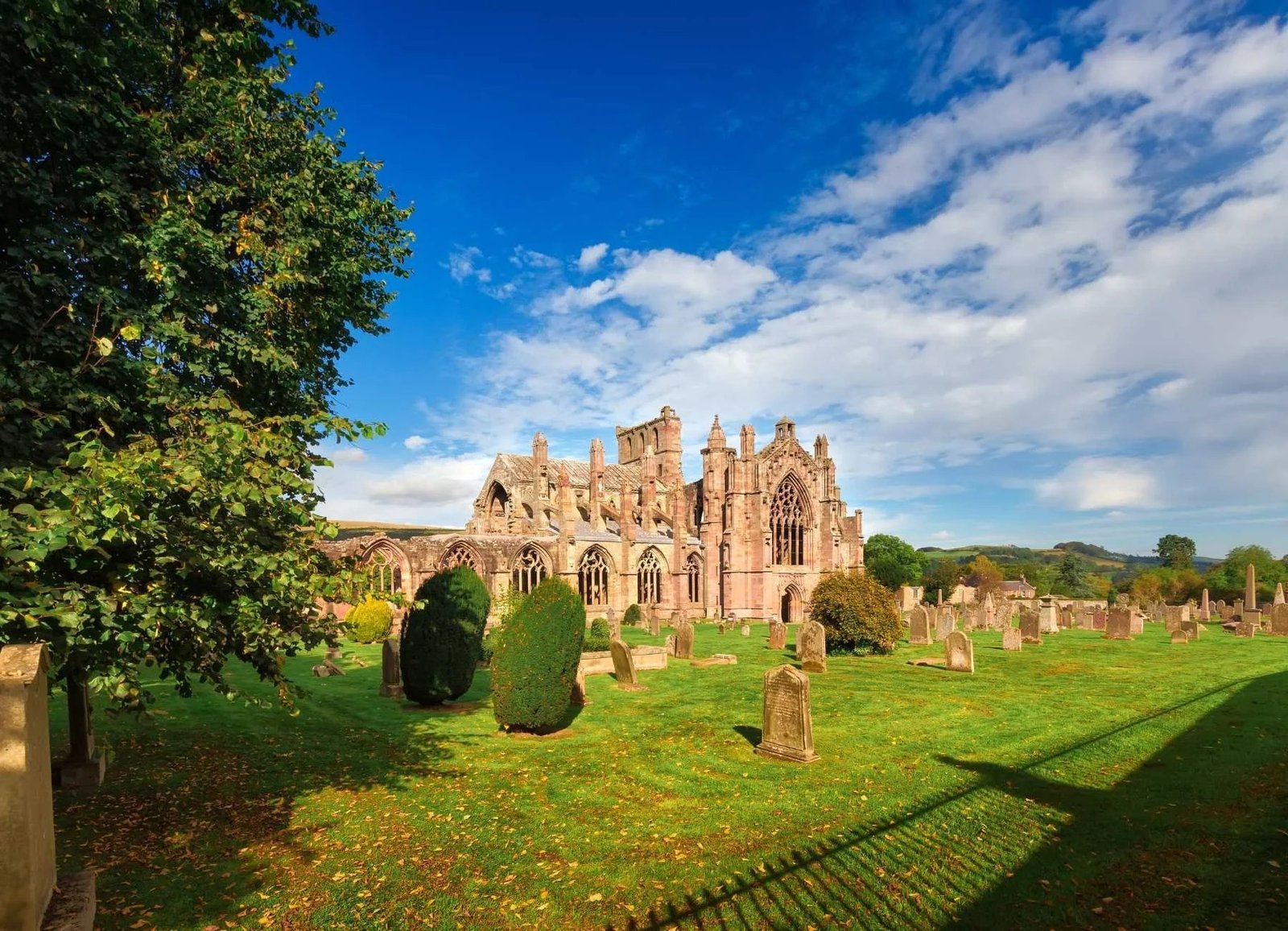
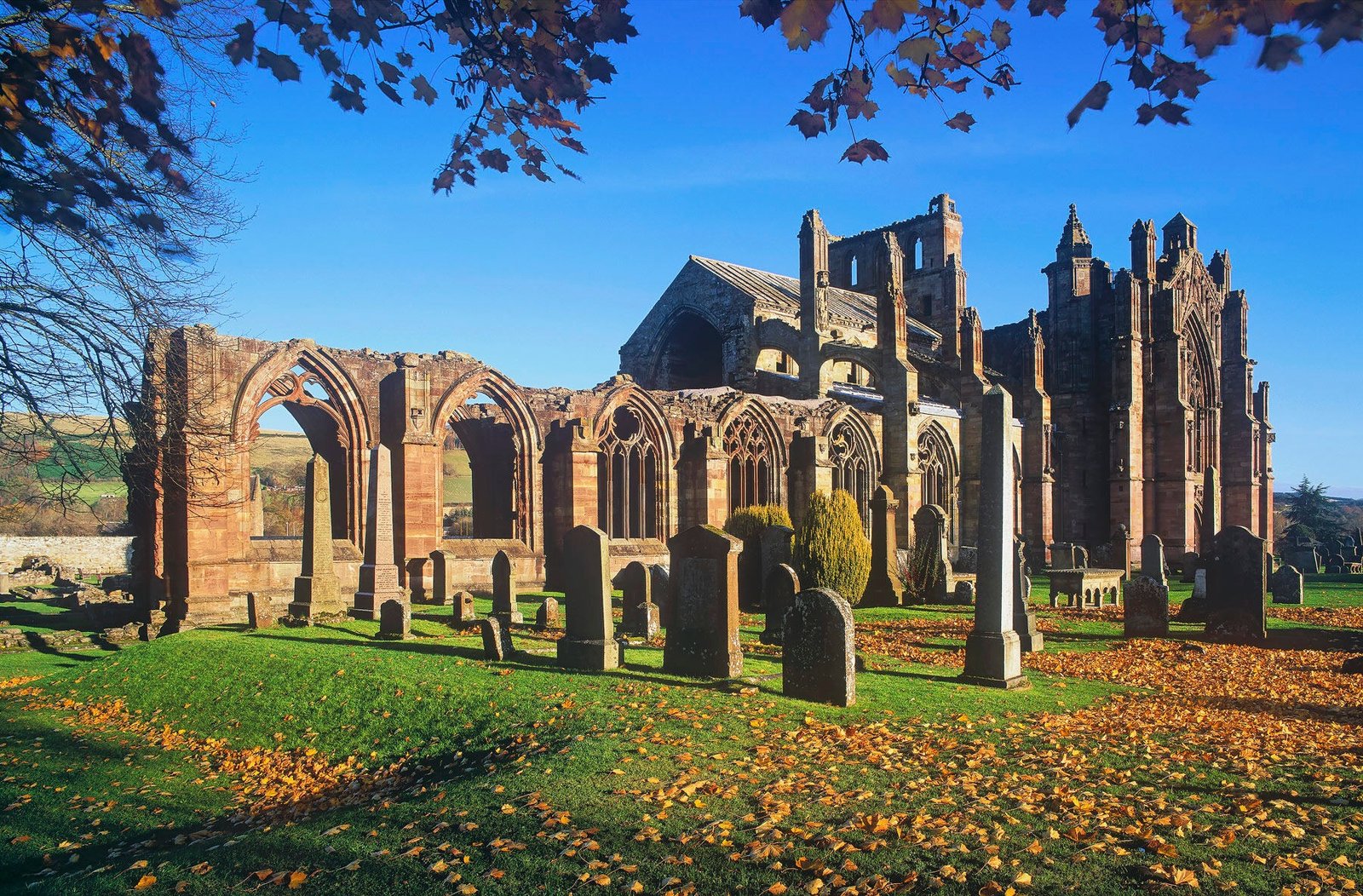
Melrose Abbey is one of the most impressive medieval ruins in the Scottish Borders and one of those places where the detail becomes more interesting the longer you look.
The red sandstone remains include soaring arches, carved stonework, cloisters and the remains of a great abbey church, all set just a short walk from the centre of Melrose.
Explore the Abbey Ruins
The scale of the surviving church is the first thing that stands out.
Huge sections of wall, arches and windows still rise above the site, giving you a good sense of how important the abbey once was.
Take your time walking through the ruins rather than simply following the shortest route around them.
Look for the Carved Details
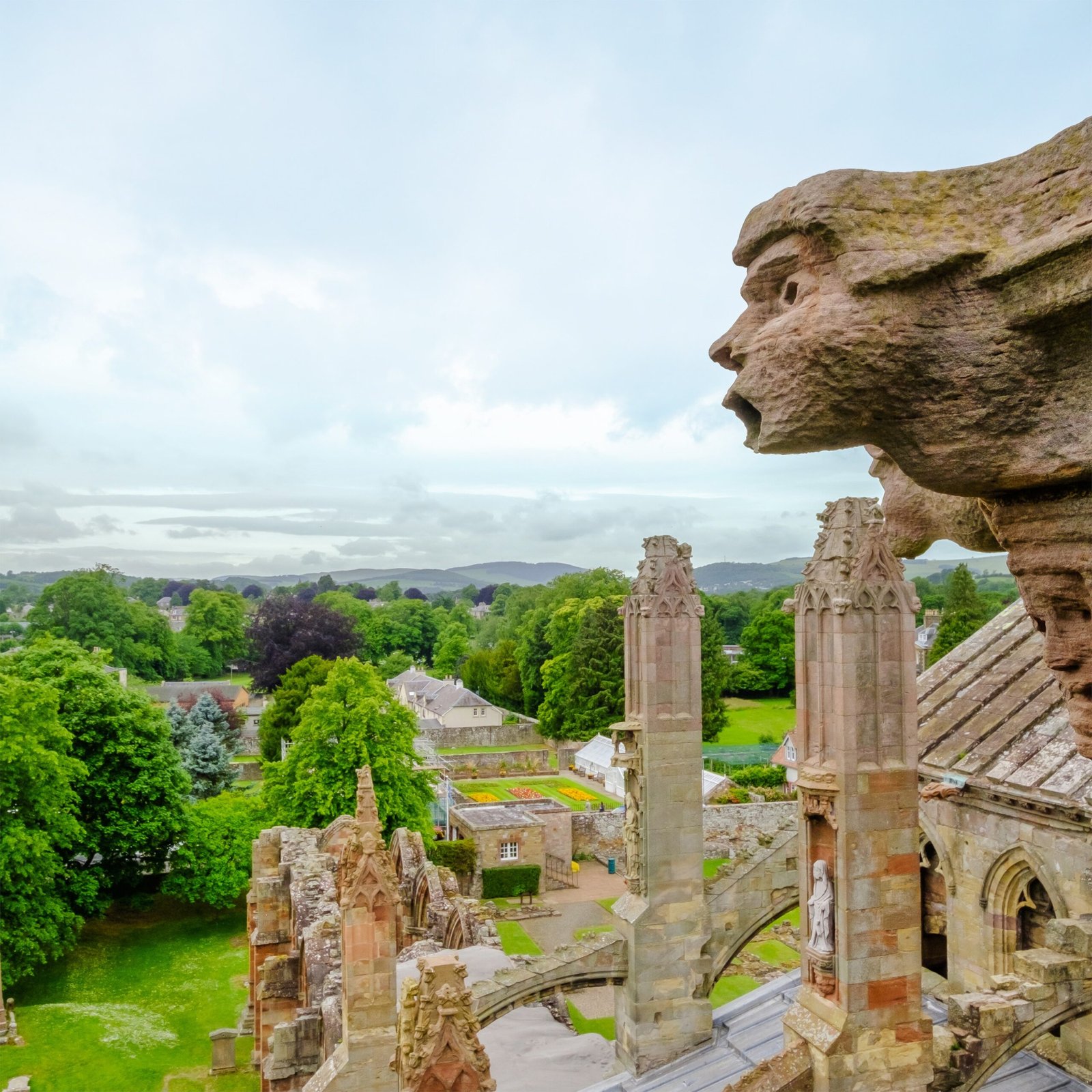
The abbey is particularly well known for the quality and variety of its stone carving.
Decorative figures, plants, animals and other details appear around windows, arches and surviving sections of the church.
Some are surprisingly playful, so it is worth spending time looking upward and around corners rather than concentrating only on the biggest architectural features.
Climb the Bell Tower
If you are comfortable with stairs, the bell tower is one of the highlights of the visit.
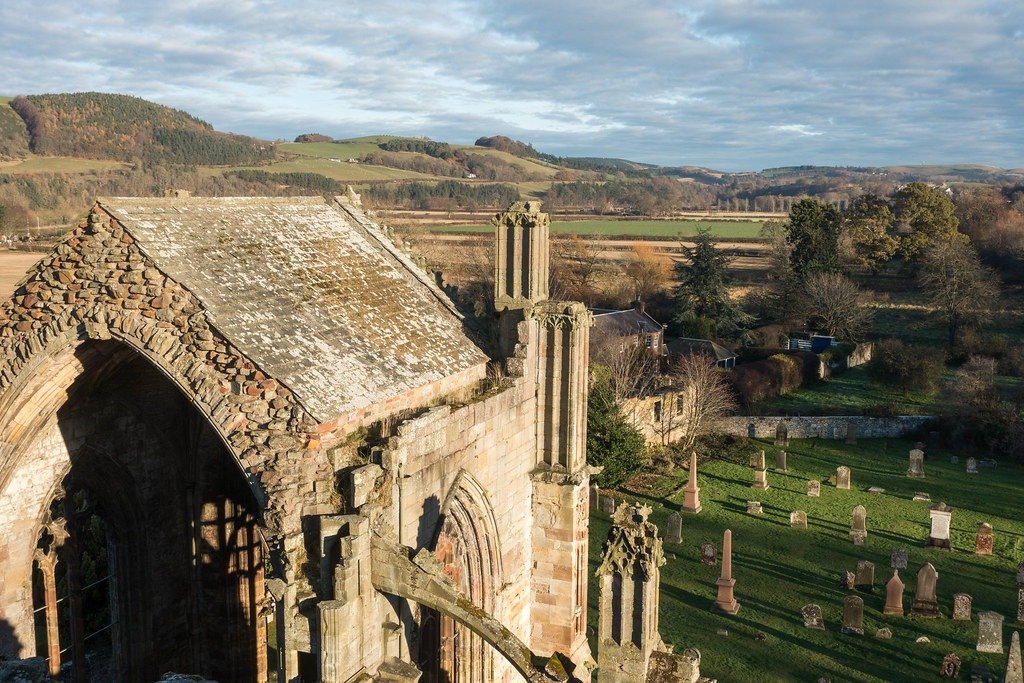
The climb takes you above the main ruins and gives you excellent views across Melrose and towards the surrounding Borders countryside.
It also helps you appreciate the layout of the abbey from a completely different perspective.
Visit the Cloister and Museum
The cloister area gives you a quieter part of the site to explore and helps explain how the abbey community once lived around the main church.
The nearby Commendator’s House Museum contains medieval objects and carved stonework found around the abbey precinct.
It is worth including because it adds detail and context to what you have already seen outside.
Join One of the Talks
Historic Environment Scotland currently runs regular talks at Melrose Abbey during the main season.
These are useful if you want more background without committing to a long formal tour.
The current programme includes afternoon talks on selected days, so check what is running when you arrive.
Enjoy the Abbey Grounds
The grounds give you plenty of space to step back and appreciate the abbey as a whole.
From different angles you can see how the church, cloisters and surrounding buildings once fitted together.
The setting close to the town also makes this easy to combine with a relaxed wander around Melrose afterwards.
Combine It with Melrose
One of the advantages of the abbey is its location.
Melrose itself is attractive and compact, with independent shops, cafés and places to eat within easy walking distance.
That makes it easy to spend a few hours at the abbey and then continue exploring the town rather than driving straight on to the next attraction.
A Few Useful Tips
Melrose Abbey is at Abbey Street, Melrose TD6 9LG.
From 1 April to 30 September, the abbey currently opens daily from 9.30am to 5pm. From 1 October to 31 March, it opens daily from 10am to 4pm. :contentReference[oaicite:1]{index=1}
The museum closes for lunch from 12 noon to 2pm, so bear that in mind if the Commendator’s House is an important part of your visit. :contentReference[oaicite:2]{index=2}
Allow around one and a half to two hours for a relaxed visit, longer if you climb the bell tower, spend time in the museum or join a talk.
Some areas remain closed while conservation work continues, although much of the abbey, grounds, cloister and museum are currently accessible to visitors. :contentReference[oaicite:3]{index=3}
The historic ruins include steps, uneven ground and narrow areas, so access varies across the site.
The abbey is close to the centre of Melrose, making cafés and other facilities easy to reach before or after your visit.
Stay in the Scottish Borders: Find accommodation for visiting Melrose, the Borders abbeys and the surrounding countryside.