

Ask UK Holiday Breaks
Tell us where you're going, who you're travelling with, or what you'd like to do.
Dryburgh Abbey
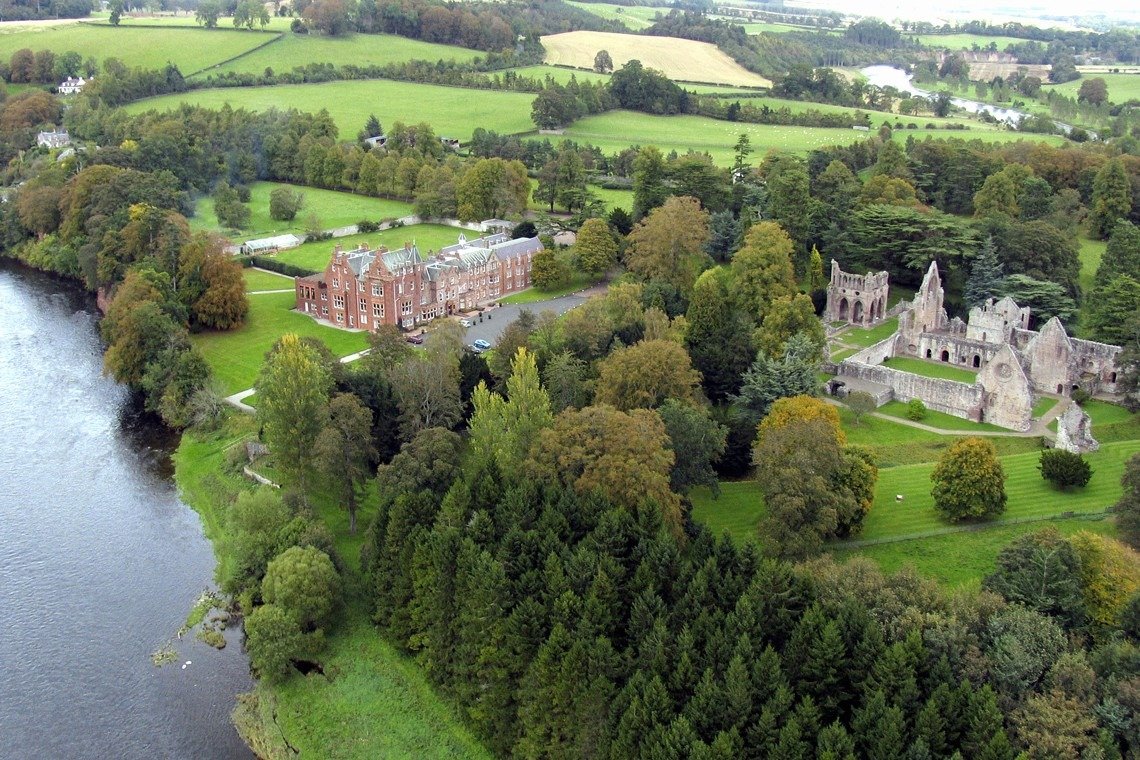
Dryburgh Abbey is one of the most peaceful historic sites in the Scottish Borders.
Set beside the River Tweed, the ruins are surrounded by mature trees and quiet grounds, giving the abbey a much more secluded atmosphere than many larger historic attractions.
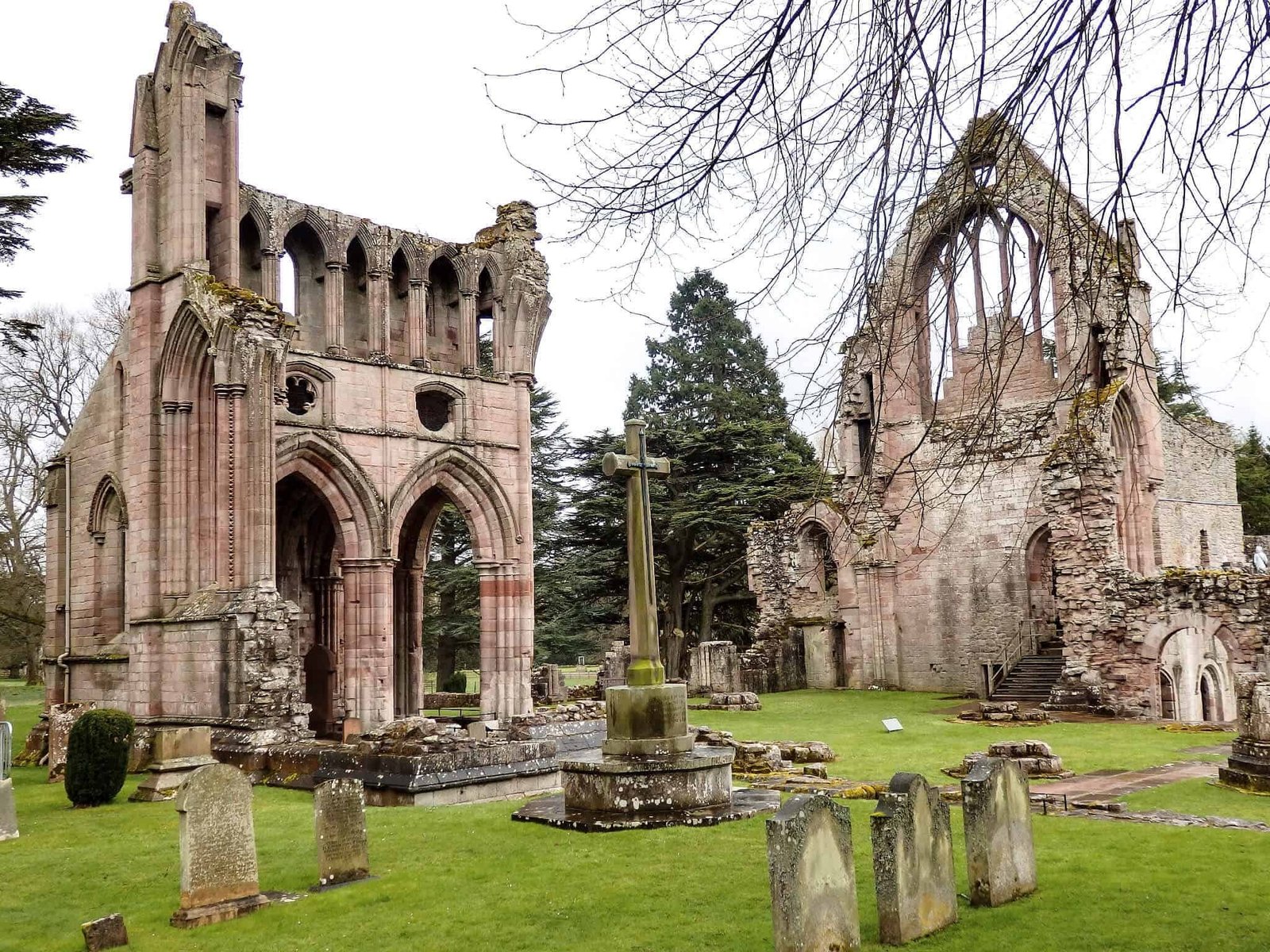
Explore the Abbey Ruins
Dryburgh was founded in the 12th century and developed into an important religious community beside the Tweed.
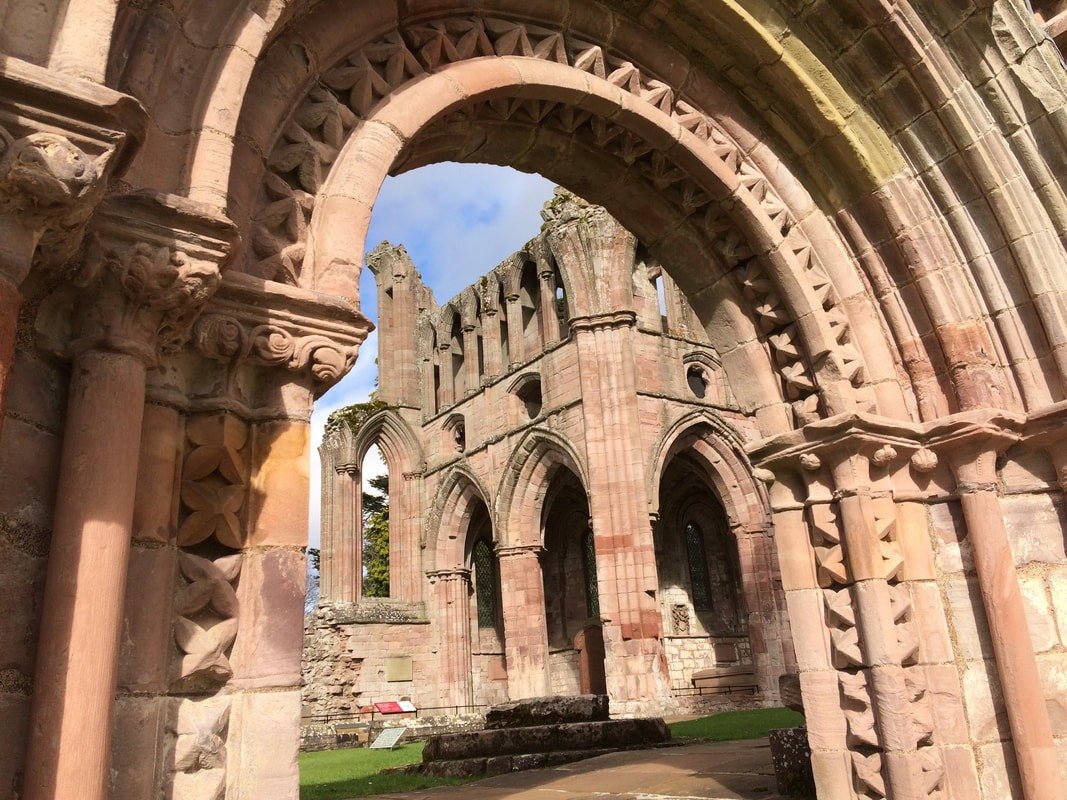
The surviving ruins include large sections of the abbey church, cloisters, chapter house and domestic buildings.
Because so much of the layout can still be traced, it is relatively easy to imagine how the different parts of the monastery once fitted together.
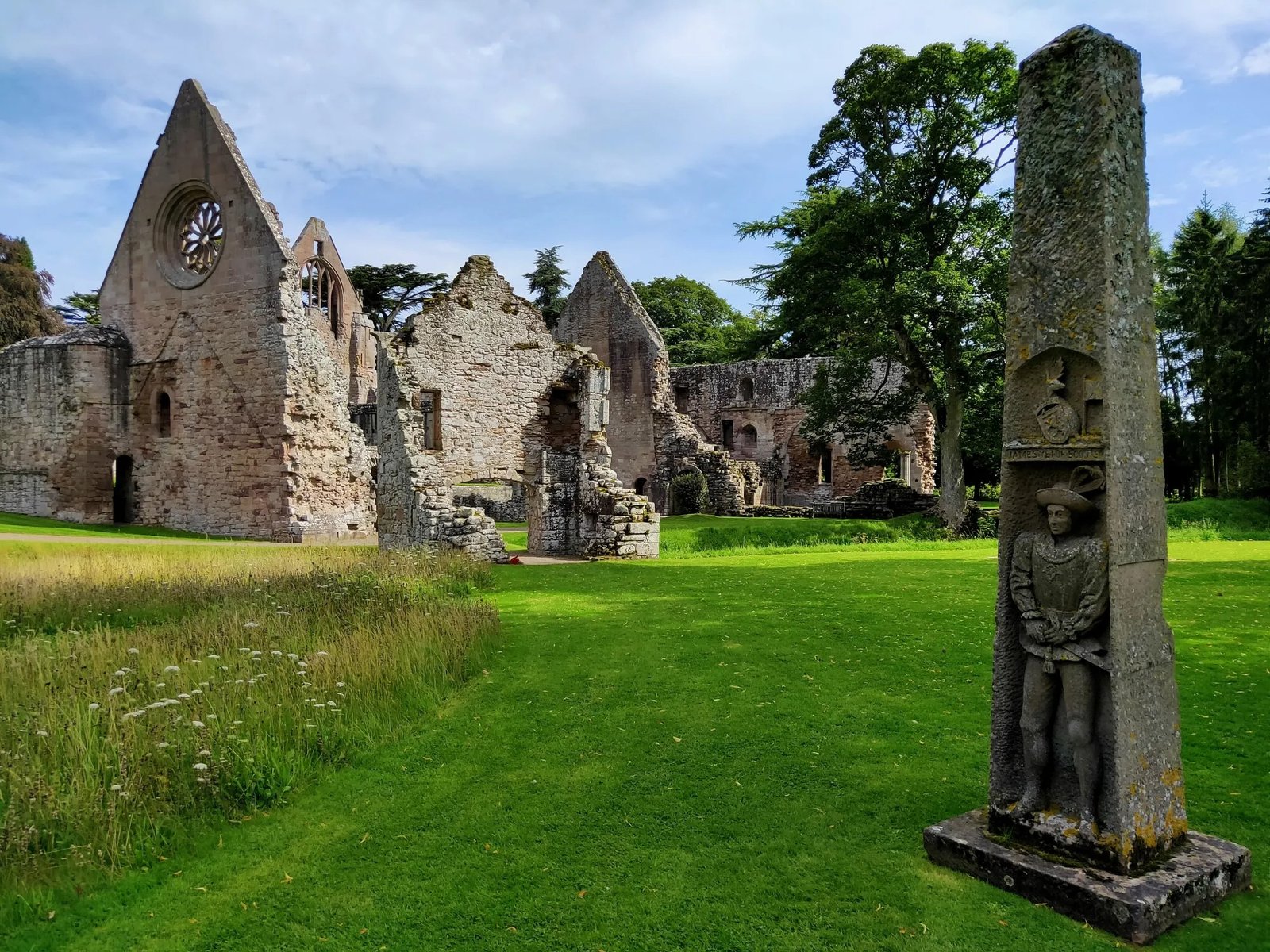
Walk Through the Cloister
The cloister was at the centre of daily monastic life.
Around it were important rooms including the chapter house, living areas, kitchens and other working spaces used by the abbey community.
Many of these remains are still substantial enough to make the original layout understandable as you walk around.
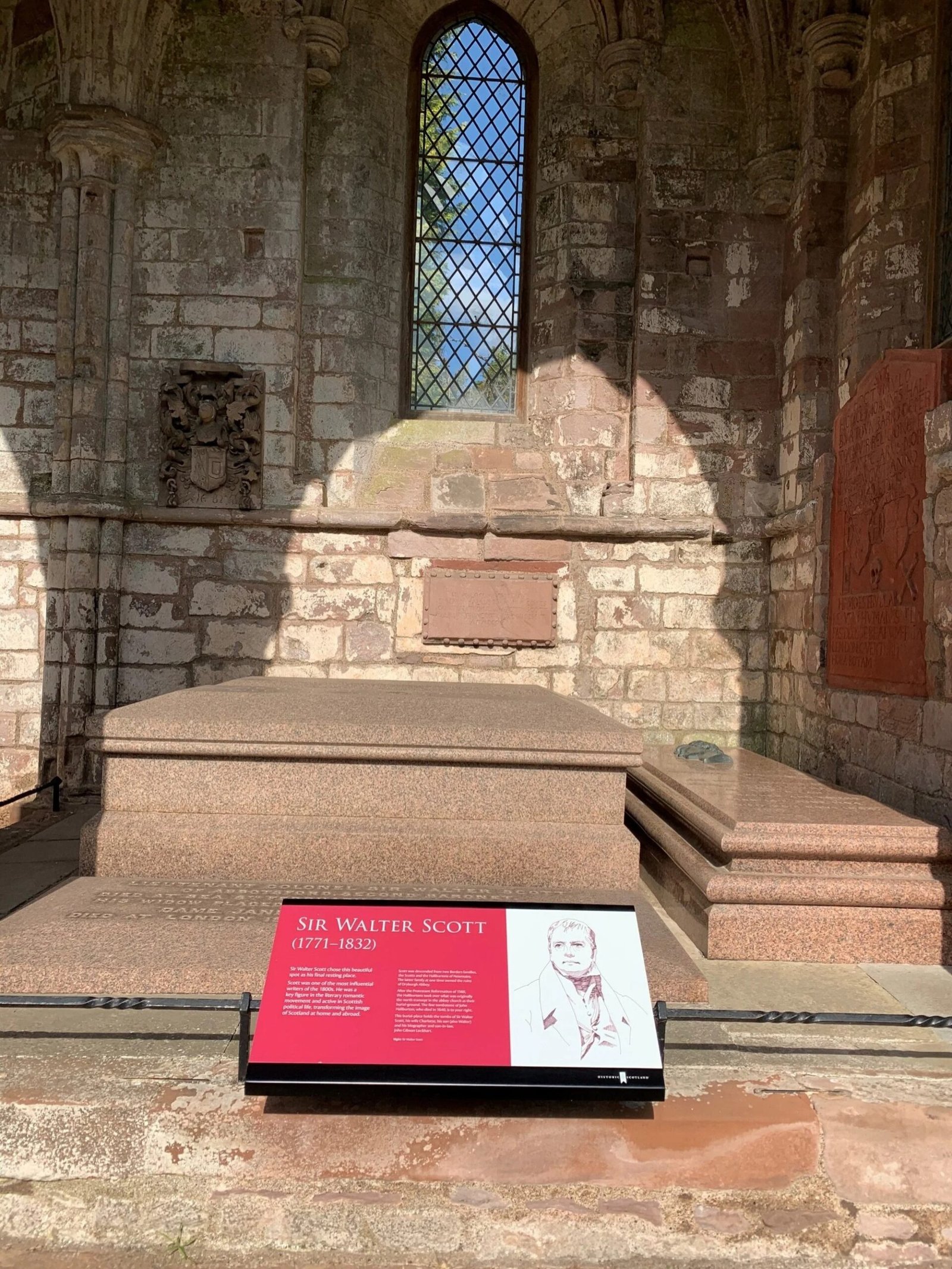
Find Sir Walter Scott’s Grave
Dryburgh Abbey is particularly well known as the burial place of Sir Walter Scott.
The Scottish novelist and poet lived nearby at Abbotsford and chose the abbey as his final resting place.
His grave lies among the historic ruins and attracts visitors from around the world who know his work or have visited Abbotsford nearby.
It also gives you an obvious connection between two of the Borders’ major historic attractions.
Discover a Turbulent History
The peaceful setting hides a surprisingly violent past.
Dryburgh was repeatedly attacked and damaged during periods of conflict between Scotland and England.
The abbey was rebuilt more than once before monastic life finally declined after the Reformation.
Knowing that history makes the survival of so much medieval stonework even more impressive.
Enjoy the Grounds
The grounds are an important part of the visit.
Mature trees, lawns and the nearby River Tweed create a setting that feels more like a quiet historic garden than a busy tourist attraction.
Historic Environment Scotland also manages the grounds for wildlife, and bats are known to roost among the old trees and abbey ruins. :contentReference[oaicite:1]{index=1}
Look for the Smaller Details
Dryburgh is not just about the large walls and arches.
Look around doorways, windows and surviving rooms for carved stonework and architectural details that reveal how carefully the abbey was built.
The quieter atmosphere also makes it easier to stop and notice features that might be overlooked at a busier site.
Combine It with Other Borders Sights
Dryburgh is particularly easy to combine with other nearby historic attractions.
Melrose Abbey and Abbotsford are both within easy reach, while Scott’s View gives you one of the best-known panoramas across the Borders countryside.
That makes Dryburgh a good part of a relaxed historic touring day rather than somewhere that has to fill the whole day by itself.
A Few Useful Tips
Dryburgh Abbey is near St Boswells, Scottish Borders TD6 0RQ.
From 1 April to 30 September, the abbey currently opens daily from 9.30am to 5pm.
From 1 October to 31 March, it opens daily from 10am to 4pm. :contentReference[oaicite:2]{index=2}
Allow around one to one and a half hours for a relaxed visit, longer if you enjoy photography or want to spend more time in the grounds.
The ruins include uneven historic surfaces and some steps, so accessibility varies around the site.
Because much of the experience is outdoors, comfortable footwear and weatherproof clothing are sensible.
Dryburgh is usually quieter than some of the larger Borders attractions, which is part of its appeal.
Stay in the Scottish Borders: Find accommodation for exploring Dryburgh, Melrose, Abbotsford and the surrounding Tweed Valley.